Tesla Model 3 Highland (2025): Still Setting the Agenda
The Highland refresh has made Tesla's benchmark sedan quieter, sharper-looking, and better-specced than the car it replaced. With Chinese rivals now mounting a credible challenge — including the BYD Atto 3 we drove recently — does the Model 3 still earn the default recommendation?
Kiat Goh

You know a car has become a category default when the question stops being "should I get an EV?" and starts being "should I get the Model 3, or something else?" That shift happened for the Tesla in Singapore a while ago. The original Model 3 defined the segment. The question the Highland asks is whether it can hold that position now that the field has truly caught up.
The short answer: mostly yes, but with sharper caveats than before. The Tesla Model 3 Highland 2025 is a substantially better car than the model it replaced — quieter, more refined, meaningfully updated inside — and when you factor in the Supercharger network, the software depth, and the long-range capability of the upper variants, it still leads its class in ways that matter. But the gap has closed. The BYD Atto 3 we reviewed earlier, for instance, offers compelling real-world range, strong build quality, and a more overtly feature-rich cabin at a comparable Category A price point. The Tesla still edges it on the axes I care most about — but a buyer choosing between the two is making an interesting decision, not an obvious one.
The Exterior: A Subtler Touch
The Highland's design changes are easy to miss from a distance, which is probably intentional. Tesla sharpened the front end — slimmer headlights, a crisper bonnet line — and cleaned up the rear with a revised light cluster and less visual noise. The drag coefficient sits at 0.219, which is among the best in class and contributes directly to the Long Range variant's remarkable highway range.
In Singapore's visual landscape, the Model 3 has settled from conversation piece to known quantity. The Highland looks the part without demanding attention — considered, competent, and just angular enough to read as modern without veering into the aggressive surfaces that some rivals have adopted.
The Cabin: Where Tesla Concentrates Its Effort
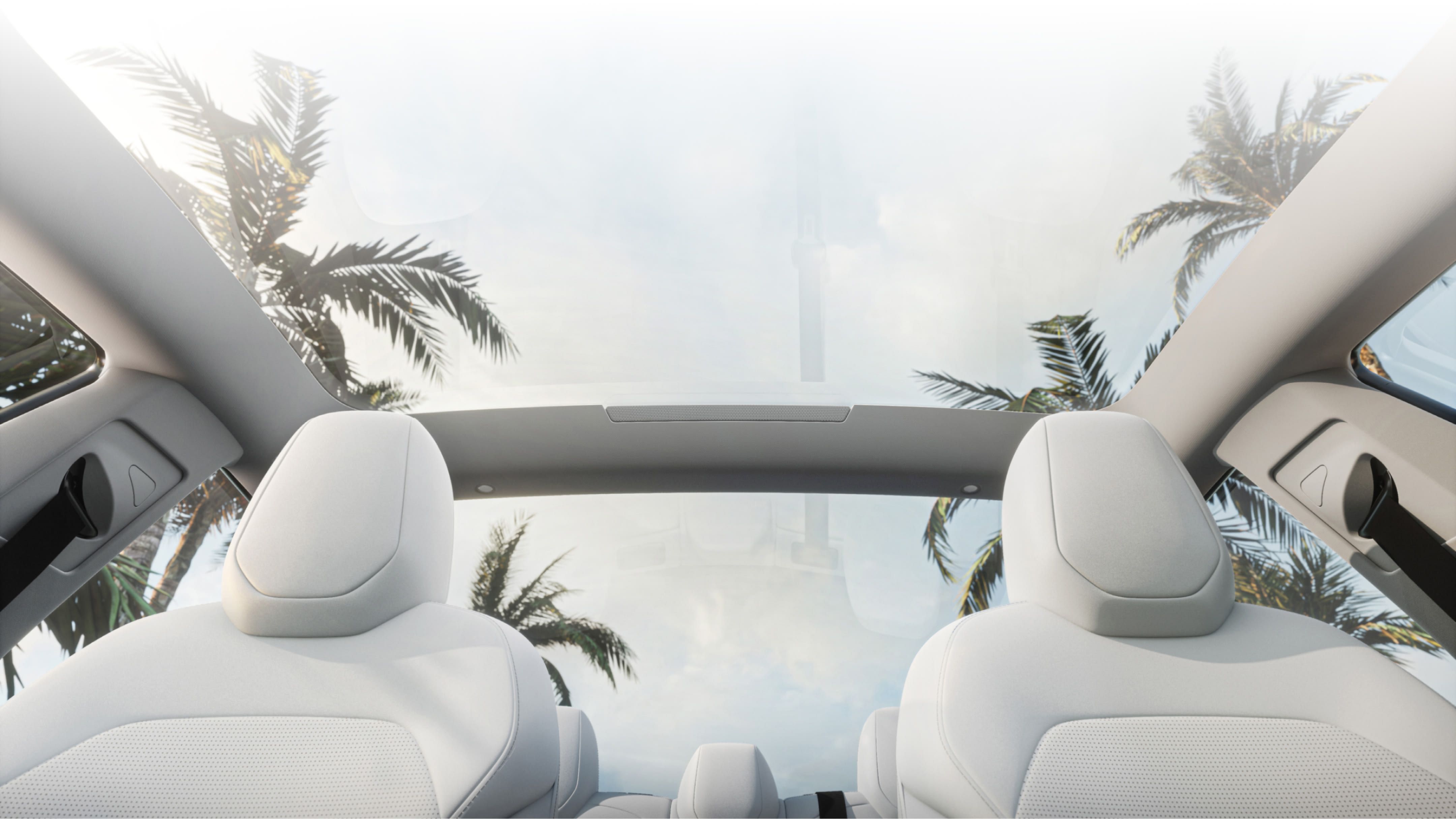
Step inside and the improvement over the previous generation is immediate. The acoustic glass does real work — road and wind noise drop to a level that makes the cabin feel almost sedanlike in its composure, especially at expressway speeds. This, combined with the retuned suspension, gives the Highland a sense of settled quality that the older car never quite achieved.
The interior now reads more premium in the right ways: softer materials on the door panels and dashboard, perforated seats (with ventilation standard across the 2025 lineup), customisable ambient lighting, and the rear 8-inch passenger screen. That rear screen is surprisingly useful — climate, music, and entertainment for back-seat passengers without needing to reach the driver's display. For a family car, it matters.
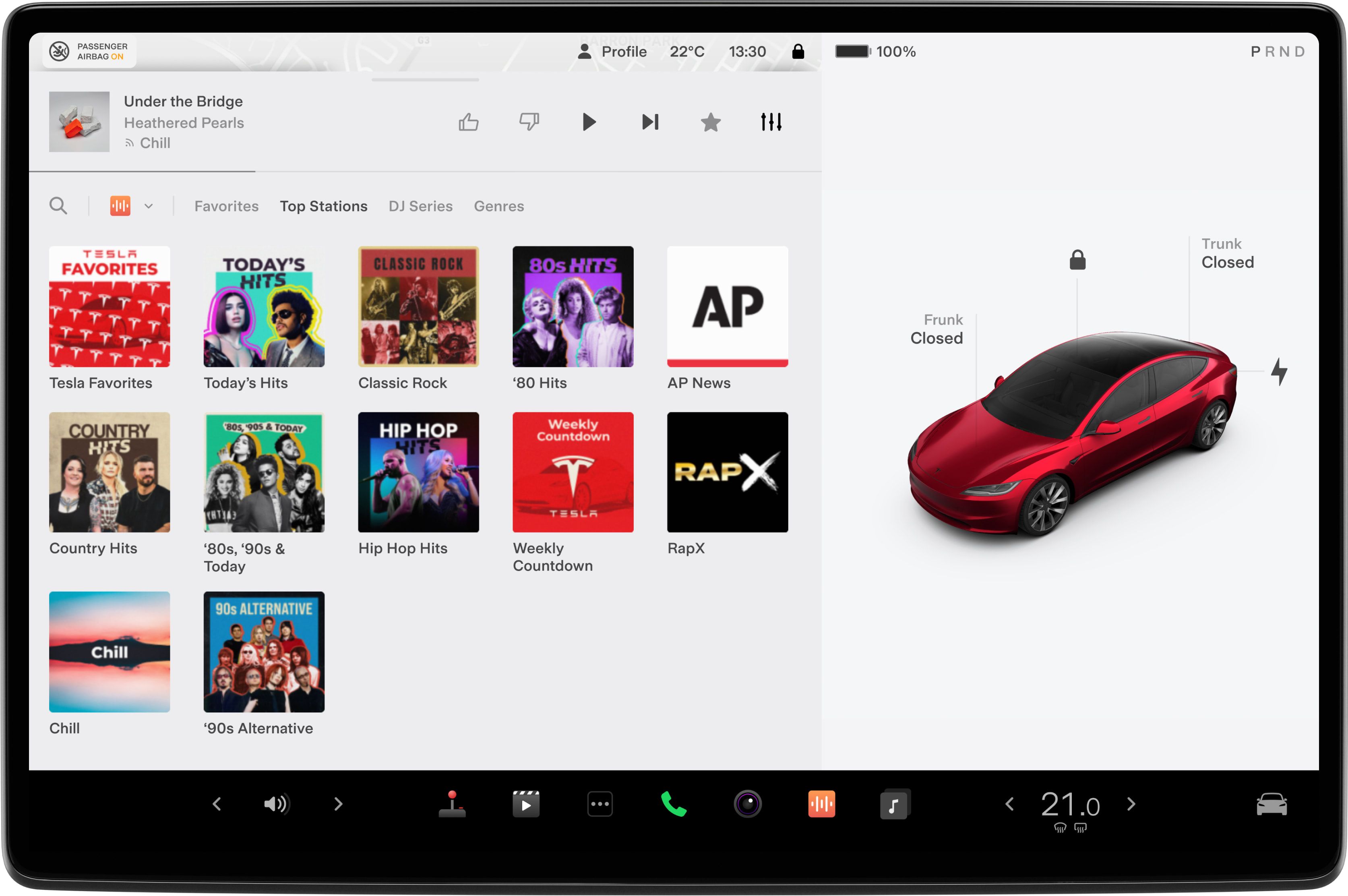
The 15.4-inch central screen remains the controlling intelligence of the entire cabin. Speed, navigation, climate, all audio, all settings — all of it lives here. I understand the design logic. Tesla has always made the argument that a single well-designed display is better than a cluster of physical controls, and for the most part the execution backs up the argument. But after spending time in the BYD Atto 3's cabin — with its physical climate controls and conventional instrument cluster — the Model 3's total reliance on the screen is a trade-off you either accept or you don't. It's not a flaw. It's a statement of intent. Just make sure you've considered your own stance on it before signing.
Storage: the front trunk adds useful capacity; the boot is generous for a car of this length. For drivers who carry airport luggage frequently, the frunk alone is a practical differentiator.
The Stalkless Situation
The Highland's most discussed change — and the one that divides opinion most sharply — is the removal of the indicator and gear stalks. Indicators are now haptic buttons on the steering wheel; gear selection is a swipe on the touchscreen (down for Drive, up for Reverse) or handled automatically when the car detects your direction of travel.
In straight-line driving and gentle cornering: fine, and increasingly natural after a few days. At roundabouts, when the wheel is rotated significantly, the haptic buttons shift to an awkward position. The car's automatic indicator function helps more than I expected, but it's not infallible.
Most people adapt within a week. On a test drive, spend deliberate time at junctions and roundabouts — not to confirm it's terrible (it usually isn't), but to calibrate how much it bothers you. For me, it's the one element of the Model 3 Highland's driving experience where I consistently wished Tesla had taken a different call.
Hardware 4 and the Autopilot Advantage
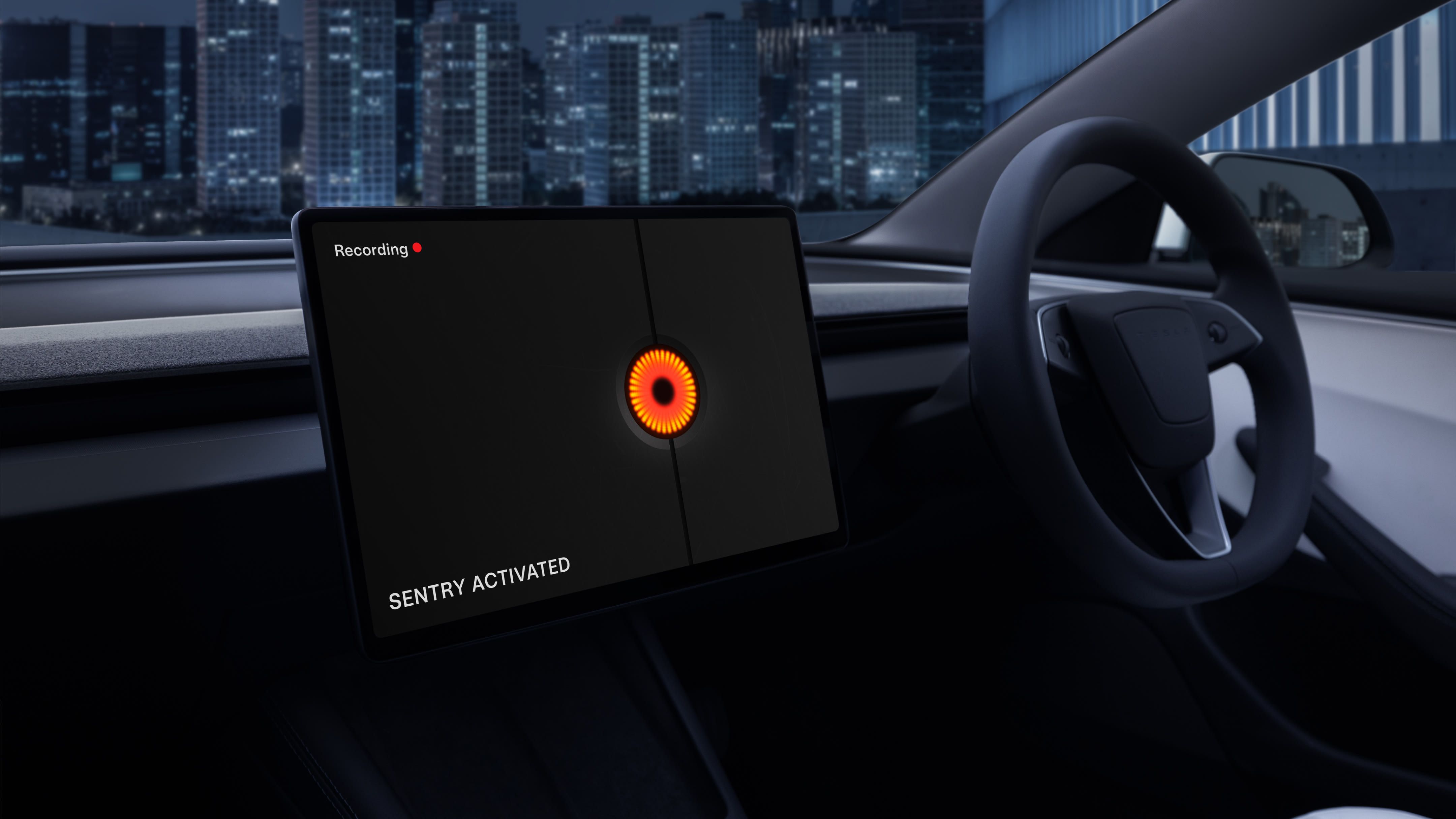
Every 2025 Tesla Model 3 Highland comes with Hardware 4 — a significant step up from the previous HW3 system, with higher-resolution cameras, increased computing headroom, and improved sensor coverage. Autopilot is standard on all variants.
On Singapore expressways, Autopilot is genuinely useful: reliable lane-keeping, smooth speed adaptation, confident in moderate traffic. FSD is available as an optional subscription; its performance in Singapore's specific junction configurations is variable, but it improves with each OTA update cycle.
The OTA update model is one of Tesla's less-discussed advantages. Over the ownership period, features improve and the car occasionally becomes meaningfully more capable without a workshop visit. For a buyer planning to hold through a full COE cycle, this is a real ongoing benefit.
Three Variants, Three Stories
Singapore gets the 2025 Model 3 Highland in three flavours:
110 kW RWD (Category A)
The 110 kW RWD is software-limited for Category A COE — same motor, power capped at 110 kW. The 0–100 km/h time of 8.6 seconds understates the real-world feel: instantaneous torque makes it feel more alive at everyday speeds than the number suggests. WLTP range of 513 km; plan on 380–430 km in Singapore conditions with regular A/C.
Long Range RWD
The Long Range RWD at 208 kW is where the car finds its natural pace — 5.2 seconds to 100, and WLTP range of 702 km. In Singapore conditions, expect 550–600 km realistically. For drivers who want to eliminate range as a consideration, this is the variant.
Performance AWD
The Performance AWD at 358 kW — 2.9 seconds to 100, track-tuned adaptive suspension, Cat B COE. If you want the performance and can justify the premium, it delivers without reservation.
Charging: The Network Nobody Has Matched
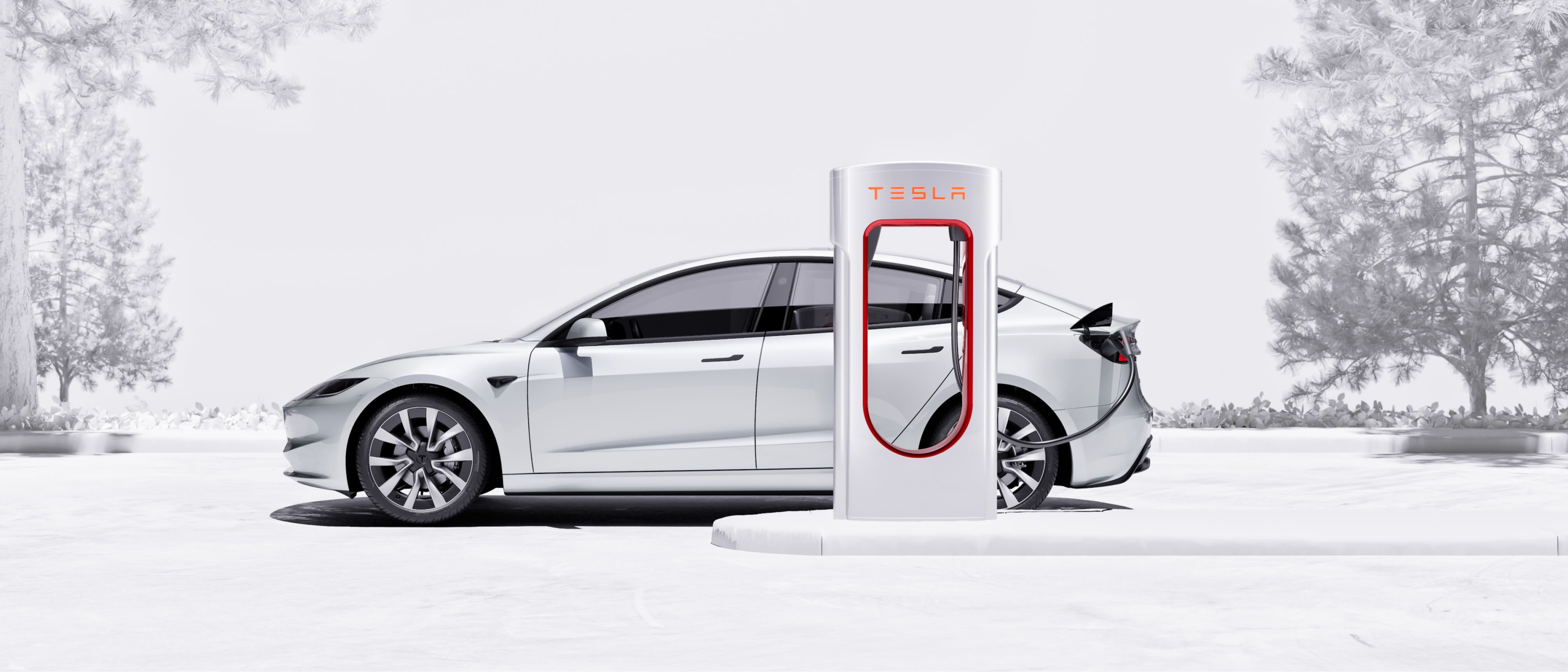
Tesla's Supercharger network remains the defining competitive advantage. You plug in, it starts charging, the car manages the session — no app fiddling, no authentication. The Supercharger at One Holland Village is Singapore's first V4 station, supporting peak rates of up to 250 kW for LR and Performance variants. Other key locations — Orchard Central, Millenia Walk, Changi City Point, The Star Vista, Resorts World Sentosa, Causeway Point — cover the island with sufficient density that most owners rarely think about charging logistics.
For the Cat A 110 kW variant, DC charging peaks at 170 kW. A 20–80% session takes around 25–30 minutes at a V3 Supercharger. AC charging at 11 kW handles overnight from a home wallbox.
This is the charging experience the CCS2 public network is still working toward. It's not a small gap.
Range: What Singapore Drivers Actually See
The 513 km WLTP figure for the Cat A variant is real but optimistic for local conditions. With consistent A/C, urban stop-start, and mixed expressway use, plan on 380–430 km as your working range. Compared to the BYD Atto 3's 300–360 km real-world figure, the Tesla offers more headroom — which matters if you charge at home and want to extend the time between sessions.
The Long Range's real-world Singapore range is approximately 550–600 km. At that point, range doesn't enter the conversation at all.
Tesla's energy display is among the most accurate in the business — it adjusts in real time to reflect actual conditions, not ideal-scenario projections.
Verdict: The Benchmark Earns Its Name
The 2025 Tesla Model 3 Highland addresses the main criticisms of the previous generation convincingly. The cabin is quieter, the materials are better, the technology is more capable, and the range figures — especially on the Long Range — are leading for a sedan of this size.
The stalkless controls are the single legitimate ergonomic concern worth probing on a test drive. The paint is still thin. The all-screen interior philosophy suits buyers who are already at ease with total touchscreen dependence — and makes others uncomfortable.
What Tesla offers that no rival has matched is the combination of the Supercharger network and the OTA improvement cycle. The car you buy today will be incrementally better a year from now, and the charging experience will remain easier than anything on the third-party public network. If you need more space, our Tesla Model Y review covers the SUV sibling.
For the Cat A bracket, the 110 kW variant covers Singapore's driving needs comprehensively — and Supercharger access alone makes it worth serious consideration over comparably-priced rivals. With more capital, the Long Range RWD removes every remaining caveat and turns the Model 3 into a car you simply don't have to think about. For anyone planning to hold the car through a full COE period, that's the one to get. From my perspective, if a different sedan suits your budget better, the BYD Seal is the closest EV alternative worth serious consideration — different price point, similar intent.
The Model 3 Highland remains a solid choice for anyone stepping into the EV journey — it delivers the core Tesla experience without the complexity that can overwhelm first-time EV buyers. For those exploring entry-level options, the BYD Dolphin is also worth a look.
Related Articles

Kia EV6 (2025): All the Right Angles
The facelifted Kia EV6 pairs sharper styling with an 84 kWh battery and 800V charging — and remains the most visually striking crossover EV at its price point. It's also the one you'll most enjoy driving. Whether that's enough depends on what you're willing to trade for it.

Hyundai Ioniq 6 (2025) Review: Aerodynamics With a Point to Prove
The Hyundai Ioniq 6 is among the most efficient EV sedans you can buy in Singapore — 800V charging, a 0.21 Cd drag coefficient, and four variants starting from Cat A. With the Tesla Model 3 as the obvious benchmark, the Ioniq 6 makes its case on efficiency and refinement rather than outright speed.

BYD Dolphin (2025): The Cat A Entry Point That Doesn’t Feel Like a Compromise
The BYD Dolphin is the most affordable EV in Singapore that still feels like a complete car. It makes the compromises you'd expect at this price point intelligently — delivering enough range, space, and technology for buyers who don't need to spend more.
Stay Charged Up
Get the latest EV news, reviews, and analysis delivered to your inbox every week.