BYD Atto 3 (2025) Review: The Compact EV That Keeps Raising Its Own Bar
Three years in, BYD's most popular compact SUV returns with a bigger screen, better tyres, and enough new kit to make the 2025 update feel genuinely fresh. Here's whether it still earns its place at the top of the Category A shortlist.
Kiat Goh

The BYD Atto 3 arrived in Singapore in 2022 to a market that wasn't quite sure what to make of it. The name was unusual, the interior design was eccentric, and the brand carried none of the reassurance that comes from a Toyota badge or a Korean warranty tradition. And yet it sold — well and steadily — because buyers who actually drove one came away impressed in ways they hadn't expected.
Three years on, BYD has refreshed the Atto 3 significantly enough to warrant treating the 2025 model as a proper revisit. The headline changes: a larger 15.6-inch rotating touchscreen (replacing the previous 12.8-inch unit), Continental 235/50 R18 rubber, ventilated front seats, a power tailgate, and an upgraded DC fast charge rate of 88 kW. On paper that looks like a spec sheet shuffle. In person, it adds up to a noticeably more complete car.
BYD Atto 3 2025 Exterior: How It Reads on the Street
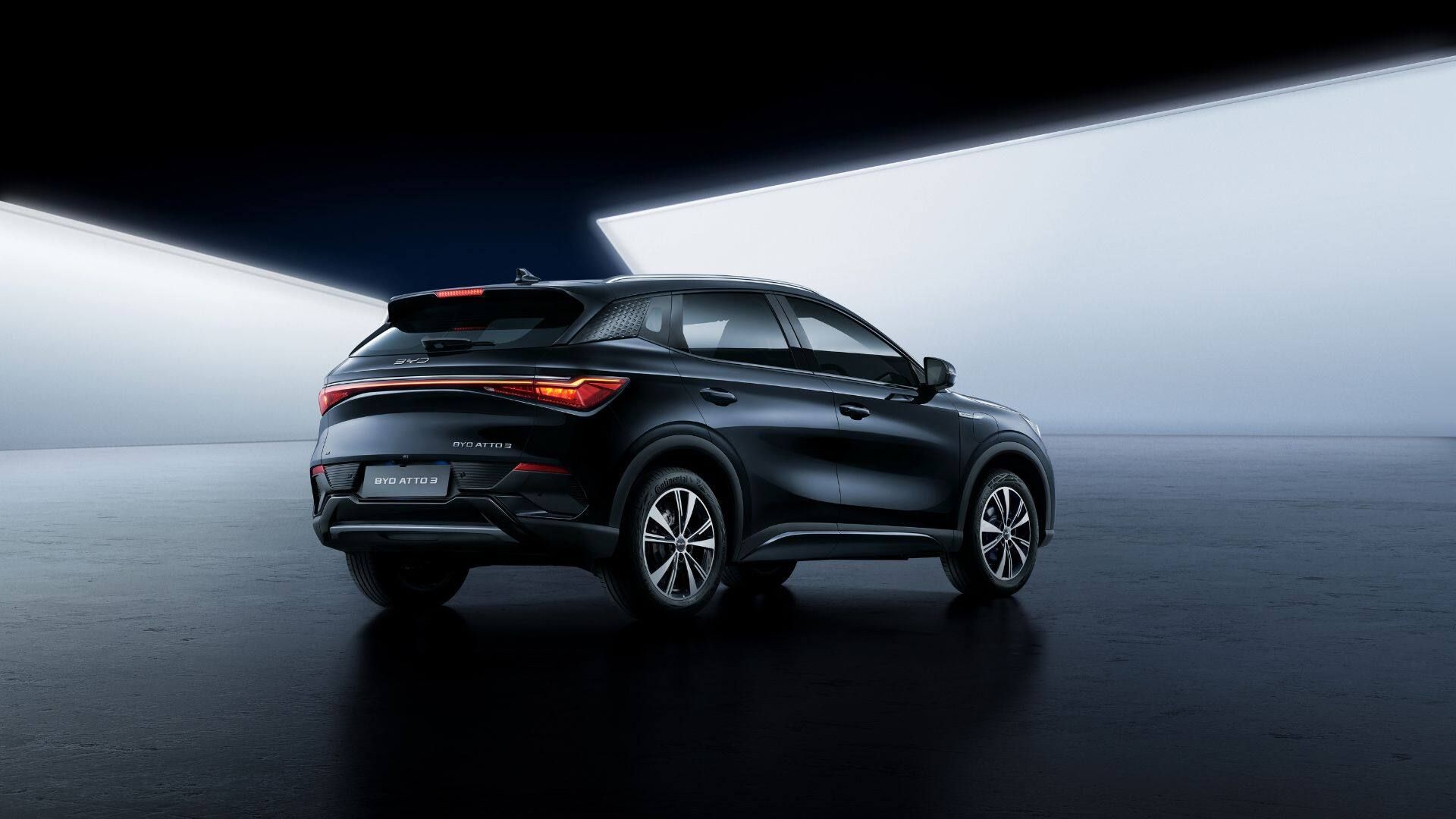
The 2025 BYD Atto 3's exterior design hasn't changed dramatically, which is mostly a good thing. BYD resisted the temptation to make the update aggressively angular in the way that some newer Chinese EVs have gone. The silhouette remains clean — a compact crossover shape that doesn't broadcast its origins too loudly. The LED headlights have a feather-inspired graphic that gives the front end a more modern read at night.
The colour palette for 2025 includes Cosmos Black, Ski White, Surf Blue, and Harbour Grey — all of which suit the understated design well. I had the Cosmos Black unit, and the contrast with the interior's dark cabin trim made for a cohesive package that didn't feel like it was trying too hard.
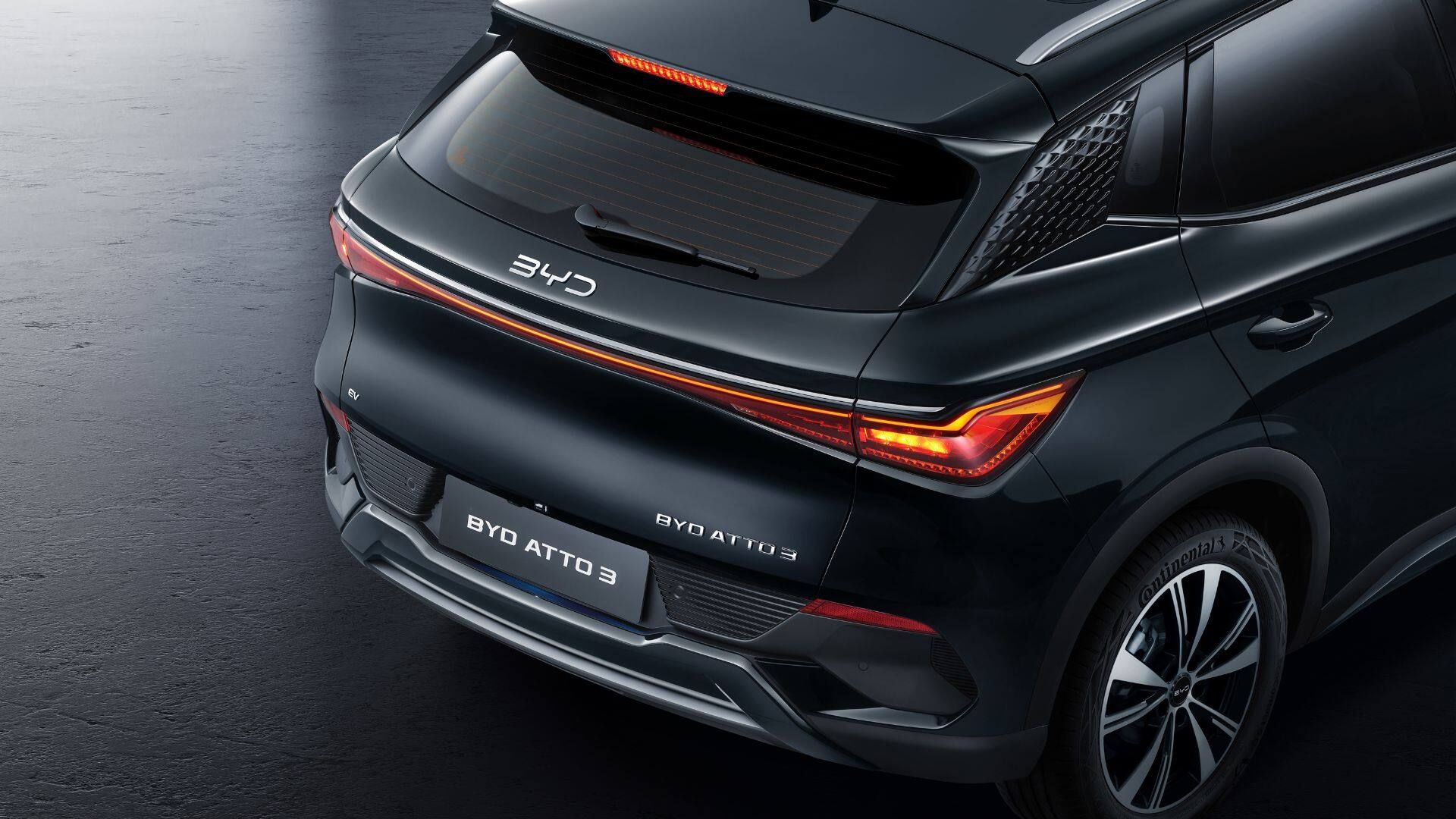
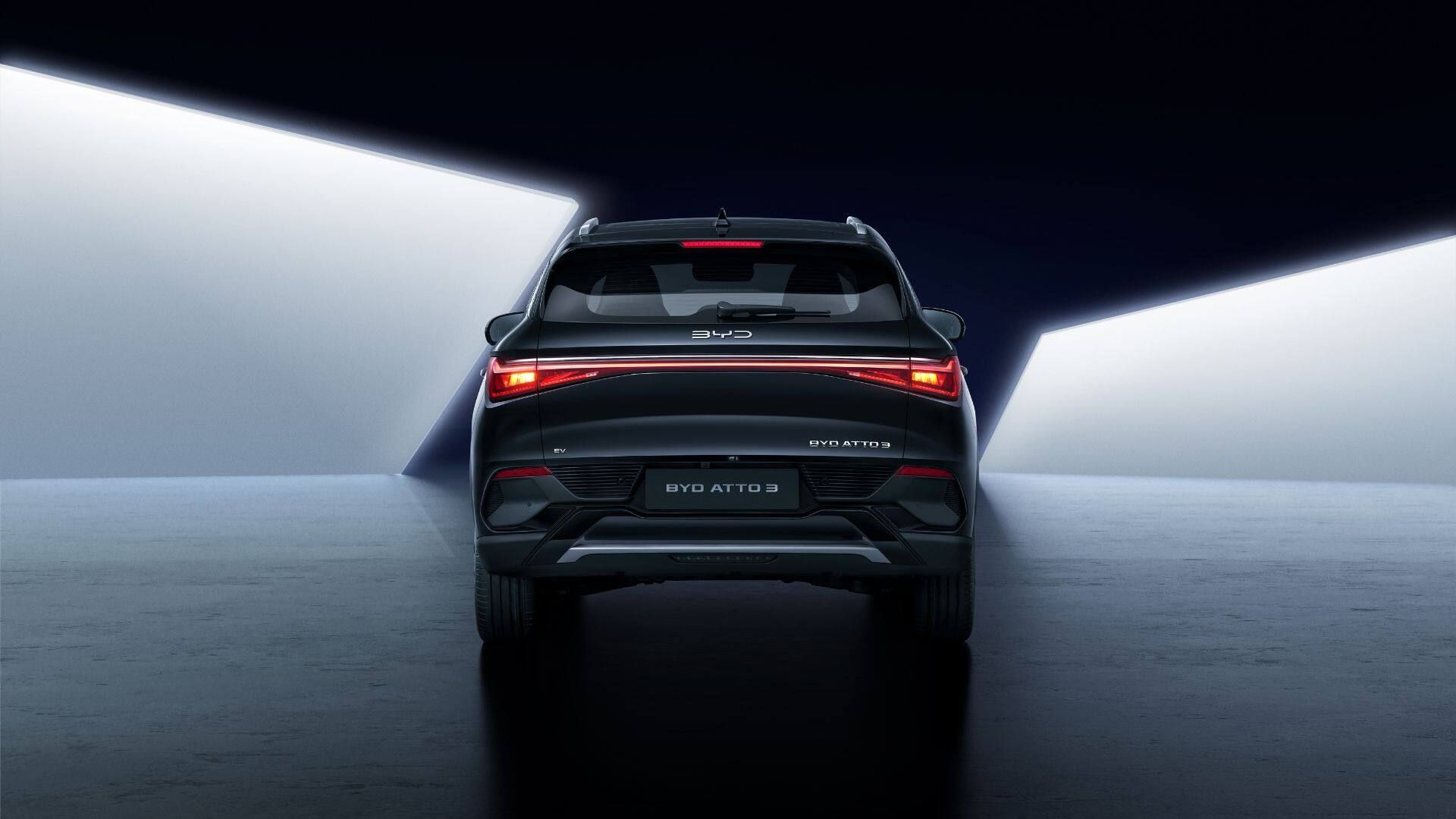
Walk around to the back and the tail treatment is similarly restrained. What I'd flag is the boot release button, which is tucked under the rear lid above the number plate — it collects grime and means your fingers get dirty after a wet run. It's a minor thing, but the kind of detail that nags on the hundredth use.
BYD Atto 3 Interior: The Upgrade That Changes the Daily Experience
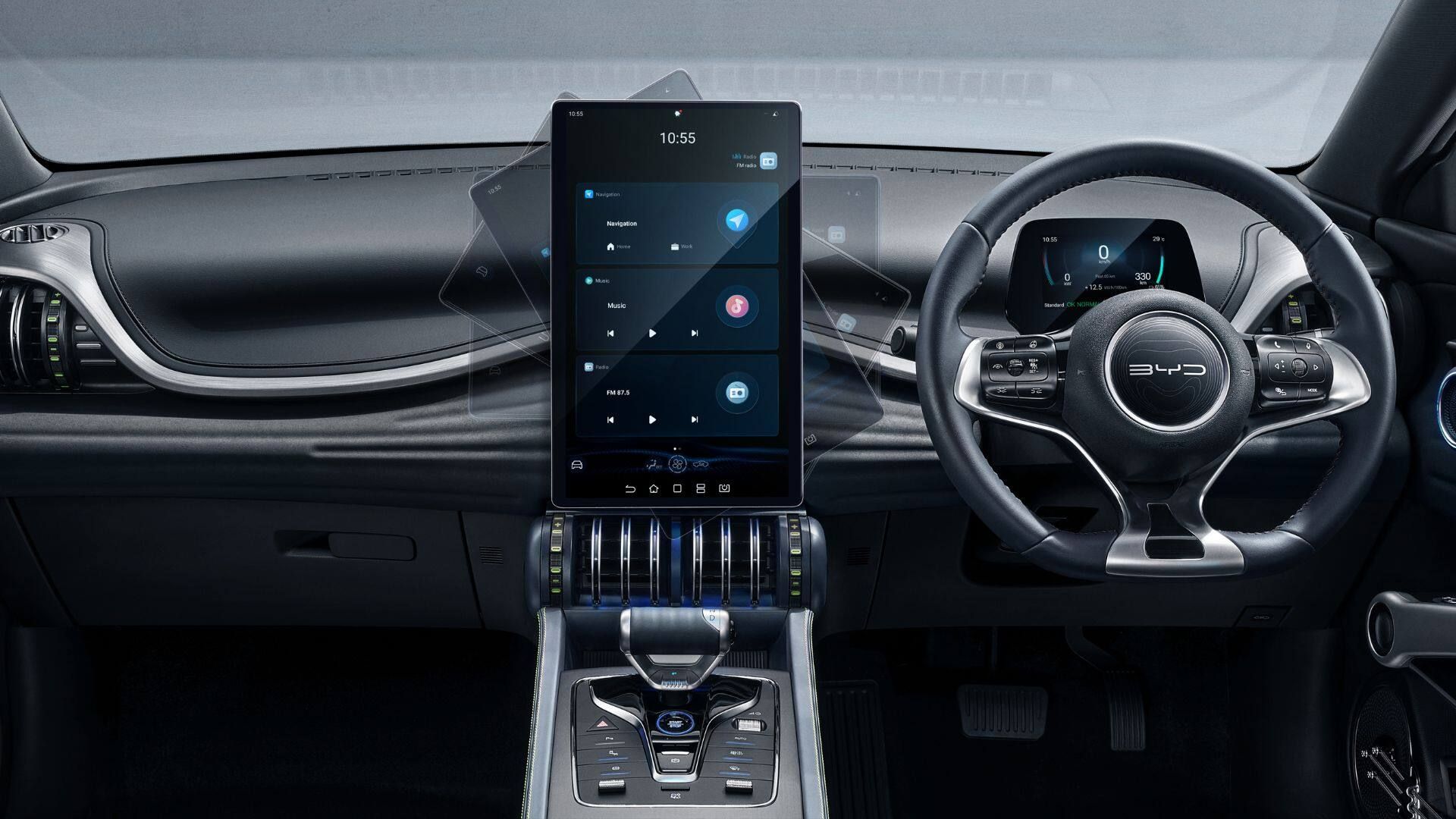
The interior is where the 2025 revision earns most of its ground. The old 12.8-inch screen was fine; the new 15.6-inch unit is considerably more comfortable to use — the jump in size makes menus easier to navigate and the map easier to read at a glance. The rotating mechanism still works smoothly (portrait for infotainment, landscape for reversing camera), and wireless Apple CarPlay and Android Auto removes the cable mess that used to clutter the console.
The five-inch digital instrument cluster behind the steering wheel remains a compromise. It's small, and the green-on-light-blue iconography isn't the most legible at speed. Some owners adapt quickly; I still think BYD should push a larger display here in the next iteration.
Ventilated front seats are a 2025 addition, and in Singapore's climate they move from "nice option" to truly useful — especially on the drive to work in morning heat. The gaming-chair-inspired side bolstering looks unusual but is comfortable for longer runs. Rear passengers get decent legroom (the flat floor helps considerably) and their own USB-A and USB-C ports plus air vents — enough to keep a family comfortable.
The panoramic sunroof is standard, and it makes the cabin feel more open than the dimensions suggest. There's a clever automatic close feature: leave the shade open when you park under bright sun, and the car closes it after a period to reduce heat soak. A small quality-of-life detail, but one that shows BYD is thinking about how the car actually lives in the local climate.
Boot space: 440 litres seats up, 1,340 litres folded — solidly practical for a weekly grocery run or airport luggage. The 60/40 rear split is straightforward to operate.
The 15.6-Inch Centrepiece — and Its Caveats
The infotainment system is visually impressive and functionally capable, but worth spending time with on your test drive before committing. On the unit I tested, everything worked as it should — but early in the Atto 3's lifecycle, some owners experienced CarPlay disconnections, Bluetooth stutters, and occasional system freezes. These have largely been addressed via OTA updates, though it's worth checking which software version any potential purchase is running.
When the system is singing, it handles navigation, climate, media, and vehicle settings cleanly. The DiLink platform has grown into itself since launch. Some settings are still buried in sub-menus more deeply than they need to be, and the way the adaptive cruise control interacts with the display shows its origins as a system designed for another market and adapted for ours.
Vehicle-to-Load capability — 2.2 kW via the CCS2 port — is standard on the 2025 Atto 3 and practically useful in ways that go beyond novelty. Whether that's running a portable cooler at the beach or powering tools at a worksite, it's a feature that would cost extra in many European rivals.
Driving the BYD Atto 3: Composed Where It Counts
The BYD Atto 3's 100 kW motor delivers 310 Nm to the front wheels — this is the Singapore Cat A-compliant specification, different from the 150 kW variant sold in other markets. The 0–100 km/h time of around 10 seconds doesn't translate to excitement in a straight line, but in traffic it means confident, effortless progress. The torque arrives immediately, without hesitation.
What the Atto 3 does well is ride quality. The suspension is comfort-tuned, and the Continental tyres (a genuine upgrade over previous fitments) have tightened the feedback loop noticeably — less road noise at urban speeds, better handling of surface transitions. On a longer expressway run at 90–100 km/h, the car stays settled and quiet. At higher speeds, there's a mild floatiness — the suspension is calibrated for comfort rather than precision handling — but it doesn't feel uncertain, just relaxed.
One thing worth flagging for drivers coming from a Tesla or an Ioniq 5: the Atto 3's regen braking won't bring you to a complete stop without the brake pedal. The highest regen setting slows the car significantly, but the last few kilometres per hour require friction braking. It took me a couple of days to adjust. Not a flaw — just a different philosophy that's worth knowing before you commit.
Steering is light and accurate — designed for urban use. Drivers who want weight and communication at speed won't find it here. For most Atto 3 buyers, that's the right trade-off.
Range and Real-World Efficiency
WLTP 420 km is the official figure from the 60.5 kWh Blade Battery. In Singapore's real-world conditions — sustained A/C, frequent stops, mixed urban and expressway use — expect 300–360 km as a more honest planning range. The trip computer tends to read more optimistically during a run; calibrating your own sense of the car's real-world range after the first week pays off.
The LFP Blade Battery chemistry carries a practical advantage for daily charging habits. LFP cells tolerate repeated full charges better than NMC chemistries, which means charging to 100% each night doesn't carry the same degradation concern. For most Singapore owners with a home wallbox, this simplifies ownership considerably. BYD backs the battery with an eight-year, 160,000 km warranty.
For Singapore-specific charging: at an 88 kW DC charger, a 30–80% top-up takes around 30–35 minutes. AC charging at 7 kW overnight covers a full charge in approximately nine hours. Singapore's CCS2 charging network — across ChargEV, SP Mobility, Charge+, and Shell Recharge — is fully compatible, and coverage has improved significantly since the Atto 3 launched.
Verdict
The 2025 BYD Atto 3 is a better car than the version that launched three years ago — and that earlier version sold steadily precisely because it offered more than buyers expected. The bigger screen, Continental rubber, ventilated seats, and 88 kW charging don't individually transform the ownership experience, but together they close the gaps that early reviewers flagged since 2022.
The instrument cluster is still too small. The infotainment has rough edges worth probing on a test drive. The ride at high speed leans toward comfort over precision. Drivers who need sharp handling or full one-pedal capability will find more satisfaction elsewhere.
But for a Category A slot and the practical demands of daily Singapore ownership — a well-appointed cabin, a versatile boot, broad charging network compatibility, strong LFP battery longevity credentials, and 300–360 km of real-world range — the Atto 3 remains hard to argue against.
The Cosmos Black with dark trim is what I'd specify, and I'd take the 2025 model over a used 2023 example without much hesitation — the accumulated upgrades across three years are substantive enough to justify it for anyone planning to hold the car through their COE period.
Related Articles

Kia EV6 (2025): All the Right Angles
The facelifted Kia EV6 pairs sharper styling with an 84 kWh battery and 800V charging — and remains the most visually striking crossover EV at its price point. It's also the one you'll most enjoy driving. Whether that's enough depends on what you're willing to trade for it.

Hyundai Ioniq 6 (2025) Review: Aerodynamics With a Point to Prove
The Hyundai Ioniq 6 is among the most efficient EV sedans you can buy in Singapore — 800V charging, a 0.21 Cd drag coefficient, and four variants starting from Cat A. With the Tesla Model 3 as the obvious benchmark, the Ioniq 6 makes its case on efficiency and refinement rather than outright speed.

BYD Dolphin (2025): The Cat A Entry Point That Doesn’t Feel Like a Compromise
The BYD Dolphin is the most affordable EV in Singapore that still feels like a complete car. It makes the compromises you'd expect at this price point intelligently — delivering enough range, space, and technology for buyers who don't need to spend more.
Stay Charged Up
Get the latest EV news, reviews, and analysis delivered to your inbox every week.