BYD Dolphin (2025): The Cat A Entry Point That Doesn’t Feel Like a Compromise
The BYD Dolphin is the most affordable EV in Singapore that still feels like a complete car. It makes the compromises you'd expect at this price point intelligently — delivering enough range, space, and technology for buyers who don't need to spend more.
Kiat Goh

The BYD Dolphin 2025: A Case for Doing Less
BYD has spent the last two years convincing Singapore that Chinese EVs deserve a spot on the shortlist. The Atto 3 proved the brand could do practical. The Seal proved it could do desirable. The Sealion 7 proved it could do big. The BYD Dolphin 2025 asks a different question entirely: what happens when BYD optimises down instead of up?
The answer is a hatchback that does less than its siblings but does it with more clarity of purpose than most cars at this end of the market. The Dolphin knows exactly who it's for — the buyer who needs an EV for urban Singapore, doesn't want to overthink charging logistics, and would rather save the difference for something other than a car. That's not a small audience. It might be the biggest audience in the country.
What makes the Dolphin interesting isn't what BYD has added — it's what they've chosen to keep. Where most manufacturers strip out features to hit a number, BYD has maintained a surprising amount of technology and refinement. The question is whether that's enough, or whether buyers within reaching distance of the Atto 3 should just stretch.
Design: Ocean Aesthetics, Compact Execution
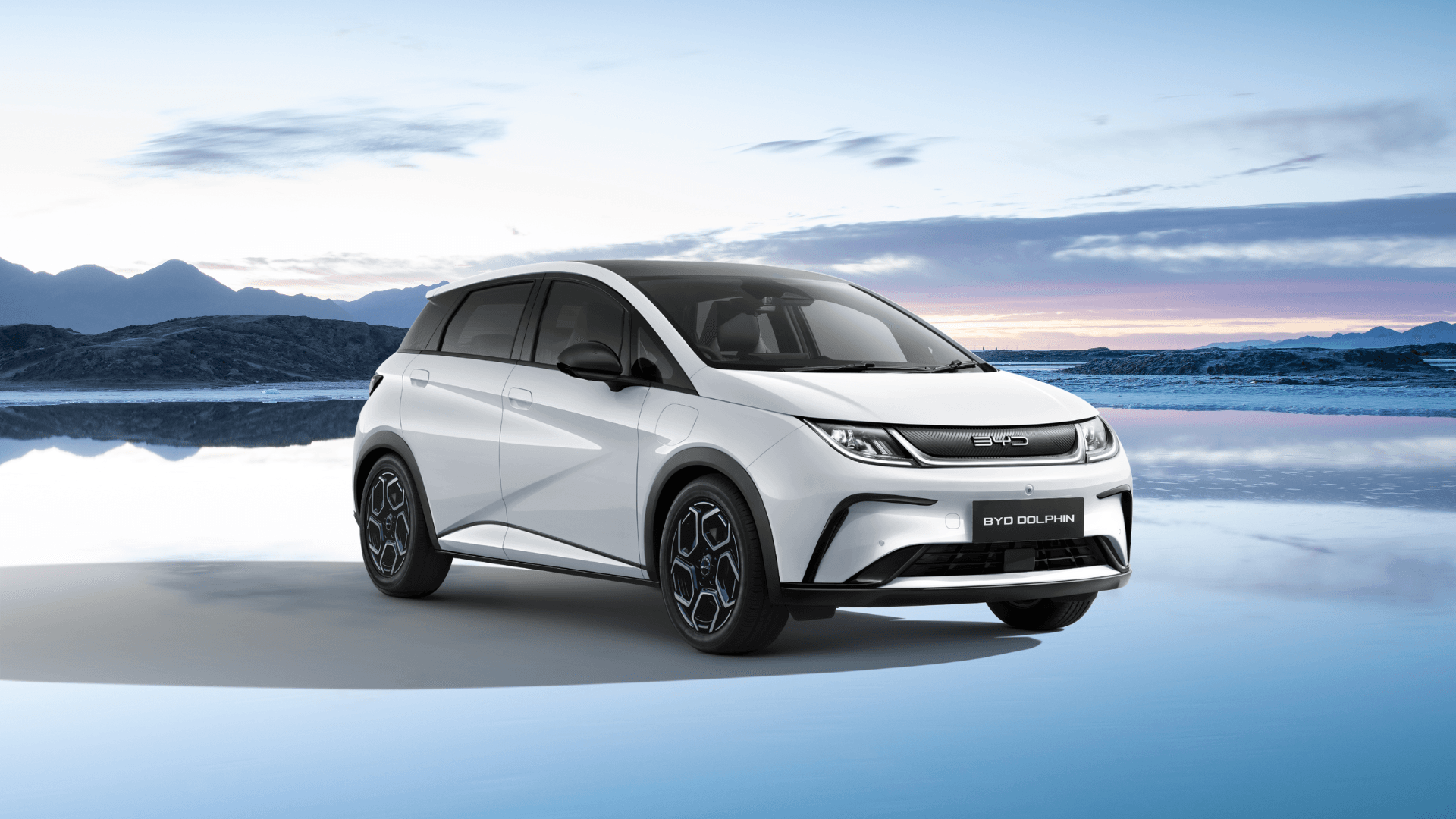
The Dolphin belongs to BYD's Ocean series, and it wears the design language well. The front end is smooth and friendly — no aggressive grille work, no overwrought light signatures trying to look more expensive than the car is. The proportions are compact but not cramped-looking, with a 2,700 mm wheelbase that gives visual stability despite a modest 4,290 mm length.
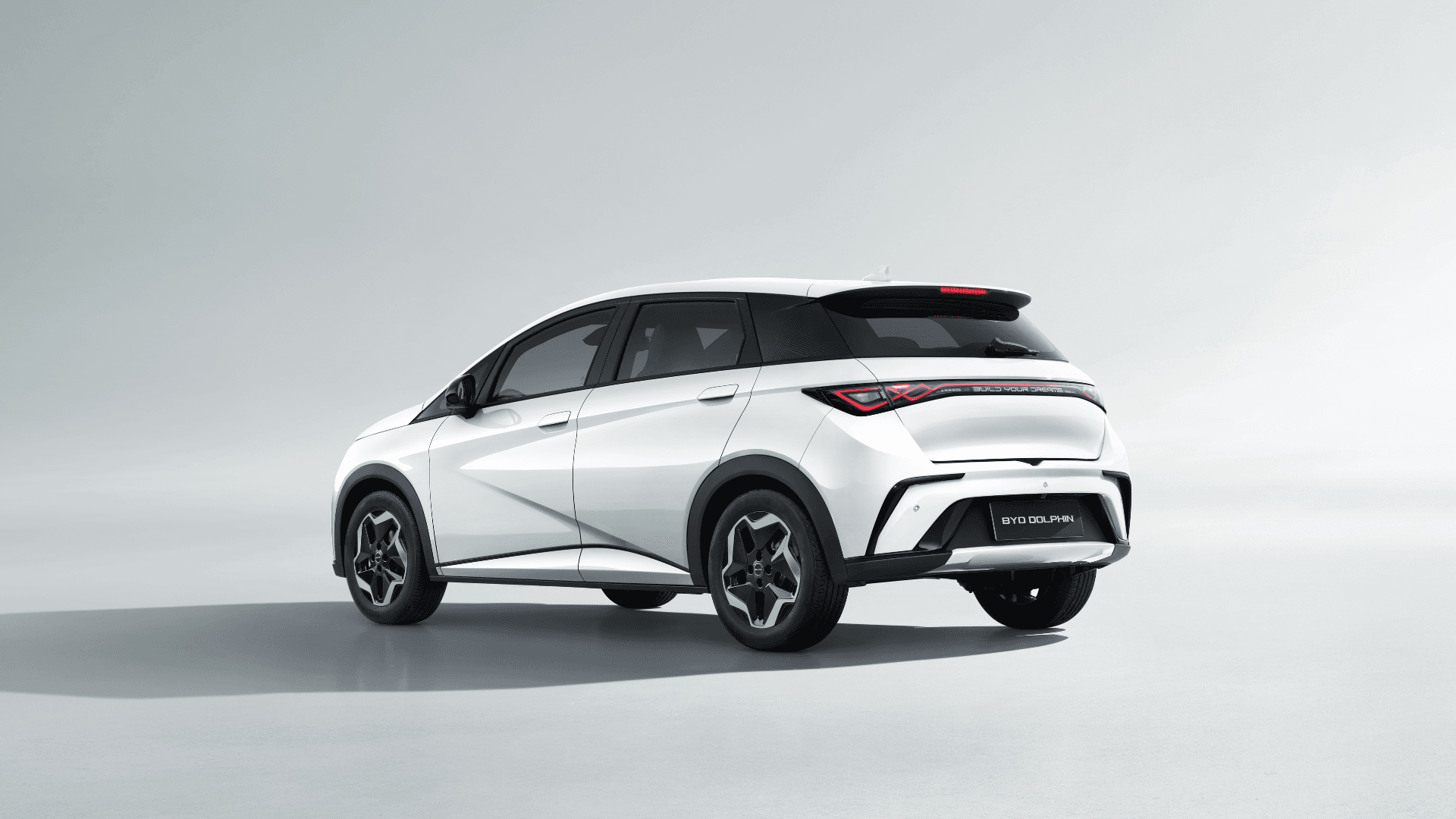
It doesn't try to look like a shrunken version of something bigger. It looks like what it is: a city car designed with intention. The full-width rear light bar reads cleanly at night, and the hatchback profile gives it a purposeful stance. Several owners I've spoken to mentioned the design as a factor in their purchase — one described it as "the first affordable EV that doesn't look like it's apologising for being affordable." That tracks.
Interior, Features, and the Rotating Screen
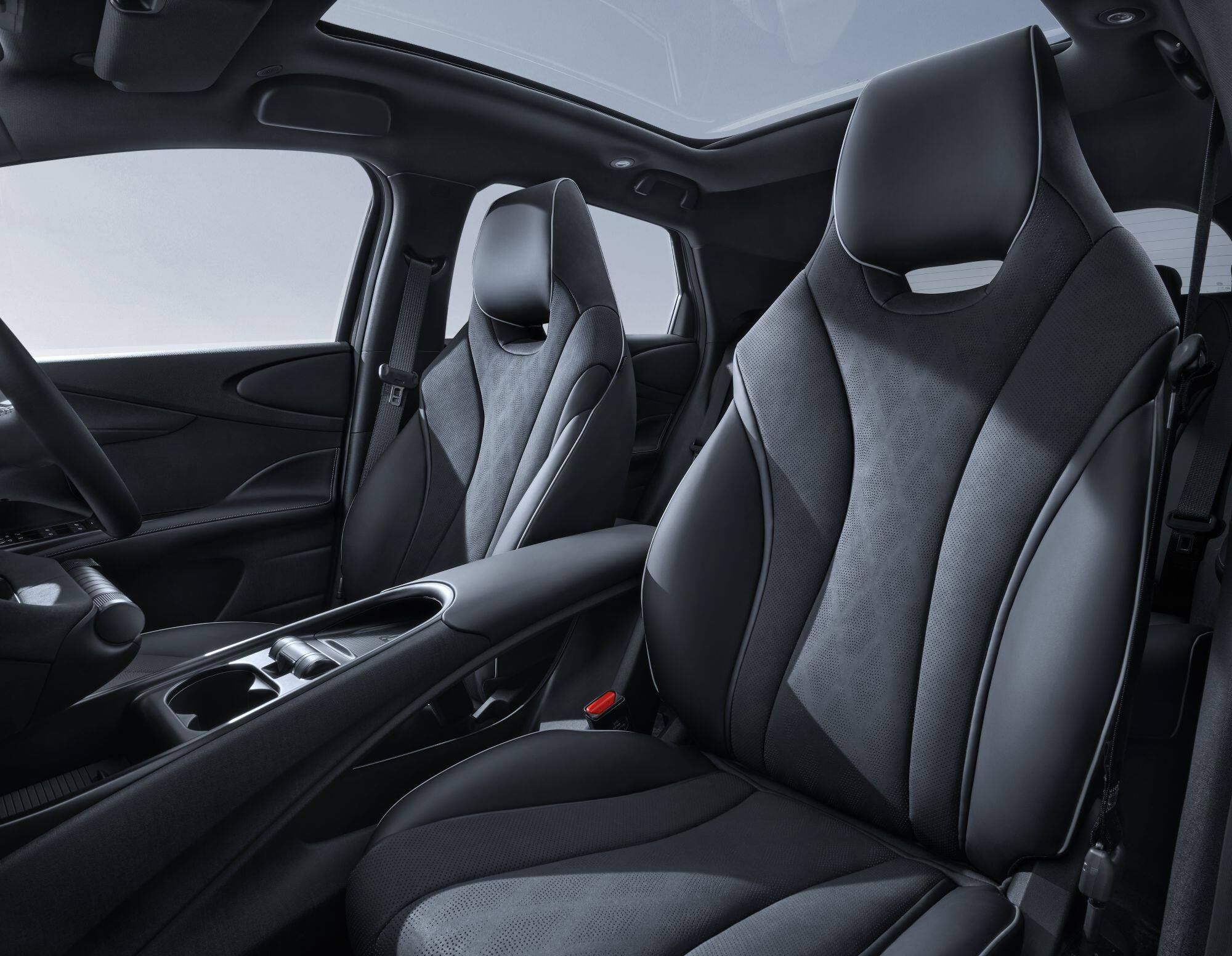
Yes, the 12.8-inch rotating touchscreen is a party trick. It spins from landscape to portrait, and the first time you show a passenger, they will react. But the more important question is whether it works once the novelty wears off — and it does. The screen is responsive, the menu structure logical enough to learn within a week, and portrait mode is genuinely useful for navigation in Singapore's vertical urban grid.
What surprised me more was the rest of the cabin. The materials aren't premium, but they're considered. The dashboard textures have a design coherence that's absent from most cars at this end of the market. The flat-bottomed steering wheel feels good in hand.
The flat rear floor — a benefit of the dedicated EV platform — transforms what could have been a cramped back seat into something notably usable. Two adults and a child seat will find more room than the external dimensions suggest. The e-Platform 3.0 architecture earns its keep here: the Dolphin lives bigger than it measures.
Boot space is 345 litres, expanding to 1,310 litres with seats folded. That's less than the MG ZS EV's 488 litres, and it's a trade-off worth knowing about. For weekly groceries, it's fine. For an IKEA run, you're folding seats.
The feature list reads like something from a segment above. Ventilated front seats, wireless phone charging, 360-degree camera, rain-sensing wipers, sunroof — all standard. Six airbags including far-side protection. Adaptive cruise control and lane departure warning. At this end of the market, that combination is rare.
One gripe that came up repeatedly with owners: the Dolphin is heavily touchscreen-dependent for climate controls. In Singapore, you're adjusting the aircon constantly, and the lack of physical buttons is a daily friction point. The MG ZS EV gets this right with dedicated climate buttons. The Dolphin asks you to tap a screen.
Driving in Singapore: Urban Comfort, Expressway Compromises
The Dolphin's 99 kW motor produces 310 Nm of torque, and BYD's throttle calibration tells you exactly where they expect this car to live. Off the line, it's brisk without being startling — enough to merge confidently, never enough to feel urgent. The 0-100 time of 9.3 seconds is comparable to a 1.6-litre ICE car, and in Singapore's real-world conditions, that's adequate.
More importantly, the Dolphin is smooth. No awkward surge when you touch the accelerator, no hesitation when you lift off. It's the kind of calibration that makes passengers comfortable and the driver look competent. For a car that will spend 90 percent of its life in urban traffic, that matters more than a quick sprint time.
The suspension is tuned soft — softer than the Atto 3, noticeably softer than the MG4. Over expansion joints and patched surfaces, the Dolphin absorbs impacts with a composure that belies its compact dimensions. It takes the edge off in a way that makes daily driving more pleasant.
At higher speeds, the compromises appear. Tyre noise intrudes more than it should — several owners flagged this as their primary complaint. The cabin insulation lets road noise through above 90 km/h. It doesn't ruin the experience, but it reminds you where this car sits in the lineup.
The steering is light and direct — perfect for parking, less communicative on open roads. For the way most Singapore drivers will use this car, it's the right calibration.
One thing that will test your patience: the pedestrian warning chime at low speeds. Owners consistently describe it as grating. It's a regulatory requirement, not a BYD choice, but other manufacturers have found more agreeable solutions.
Range and Charging Speed in Singapore
The 60.48 kWh Blade Battery delivers a WLTP range of 427 km, and owners consistently report meeting or exceeding that in Singapore's urban conditions. At 6.3 km per kWh, the Dolphin is efficient by any standard, and stop-start city driving plays to its strengths.
In practical terms, 427 km means most Singapore drivers can charge once a week. Some stretch to ten days. Range anxiety simply doesn't apply here — the number is more than sufficient for how people actually drive in this country.
DC fast charging tops out at 80 kW — 20 to 80 percent in roughly 33 minutes. Not class-leading, but fast enough for a quick top-up on Singapore's CCS2 charging network. AC at 7 kW means a full overnight charge in about six and a half hours. If you have home charging, speed is a non-issue. If you rely on public infrastructure, the 80 kW ceiling is workable but not exciting.
The Blade Battery uses the same lithium iron phosphate (LFP) chemistry across BYD's range. Long-term data from the Chinese market suggests durability is not a concern — LFP trades energy density for longevity, and that's the right trade for a daily driver.
BYD Dolphin vs Atto 2 vs Atto 3: Which One to Buy?
Every potential Dolphin buyer will eventually line it up against its BYD siblings — and the more relevant comparison isn't the Atto 3. It's the Atto 2.
The Atto 2 sits closest in price to the Dolphin, and it wins the head-to-head on looks — better proportions, more visual presence, and a crossover stance that photographs well. If your budget stretches to the Atto 2 and you're torn between the two, take the Atto 2. The step up is worth it for the design alone, and the slightly higher seating position suits most Singapore drivers better than a hatchback.
The BYD Atto 3 is a different calculation. It gives you meaningfully more boot space (440 litres vs 345), a better-resolved cabin, and faster DC charging (88 kW vs 80 kW). It's the more complete car by a clear margin. But it's also priced higher — and for the buyer who clearly doesn't need the extra practicality, that gap is real money.
The honest hierarchy: if the Atto 3 is within reach, take it. If it isn't, the Atto 2 beats the Dolphin on presence and is worth the stretch. The Dolphin makes its best case when you specifically want the compact hatchback footprint — easier parking, lower running costs, a smaller physical presence in Singapore's tight urban environment.
Note: Singapore also offers the Dolphin in a 70 kW Essential variant, which qualifies for Category A COE at a lower entry price.
The Verdict: Is the BYD Dolphin 2025 Worth It?
The BYD Dolphin is the most convincing argument that entry-level EVs don't have to feel entry-level. It has a feature list that embarrasses some cars a segment above, a range that makes weekly charging realistic, and a driving character tuned for the city it'll spend its life in. The compromises — boot space, expressway refinement, touchscreen-dependent controls — are real, but they're the right compromises for this position in the market.
My recommendation is specific: the Dolphin is the car I'd point toward for anyone who keeps saying they don't need much range, doesn't carry much cargo, and wants a Cat A EV that does urban Singapore better than most rivals at this end of the market. It handles the daily routine with a competence that makes you forget what you didn't pay for.
But I'll be equally specific about the ceiling. If budget stretches to the Atto 2, take that over the Dolphin — better-looking car, more presence, and the crossover stance works better for most Singapore use cases. If the Atto 3 is within reach, take that over both. The Dolphin earns its place when the compact hatchback footprint is genuinely what you want, not just what you're settling for.
Optimising down doesn't mean cutting corners. It means choosing which corners to round off and which to keep sharp. For the buyer it's built for — and that buyer is more common in Singapore than any other market — the Dolphin is quietly the most sensible EV you can buy.
Related Articles

Kia EV6 (2025): All the Right Angles
The facelifted Kia EV6 pairs sharper styling with an 84 kWh battery and 800V charging — and remains the most visually striking crossover EV at its price point. It's also the one you'll most enjoy driving. Whether that's enough depends on what you're willing to trade for it.

Hyundai Ioniq 6 (2025) Review: Aerodynamics With a Point to Prove
The Hyundai Ioniq 6 is among the most efficient EV sedans you can buy in Singapore — 800V charging, a 0.21 Cd drag coefficient, and four variants starting from Cat A. With the Tesla Model 3 as the obvious benchmark, the Ioniq 6 makes its case on efficiency and refinement rather than outright speed.
Stay Charged Up
Get the latest EV news, reviews, and analysis delivered to your inbox every week.