Hyundai Ioniq 5 (2025): A Facelift for the Car That Already Stood Out
The Ioniq 5 facelift refines what was already one of Singapore's most distinctive EVs — better software, faster charging, and a rear wiper that owners had been requesting since day one. The design still earns a second look. The specs require a second look too.
Kiat Goh

The Hyundai Ioniq 5 arrived in Singapore in 2021 and immediately looked like nothing else on the road. It still does. Three years of sales and a 2025 facelift later, the Ioniq 5 is more refined, more capable, and carries more software intelligence than the original — and it remains the most visually distinctive EV that most Singapore buyers will seriously consider.
The facelift doesn't reinvent the car. It addresses the list of requests that owners made after living with the original for several years, adds more technology, and refines the parts that needed refinement. The result is a car that was already good and is now measurably better.
The Design Still Stops Traffic
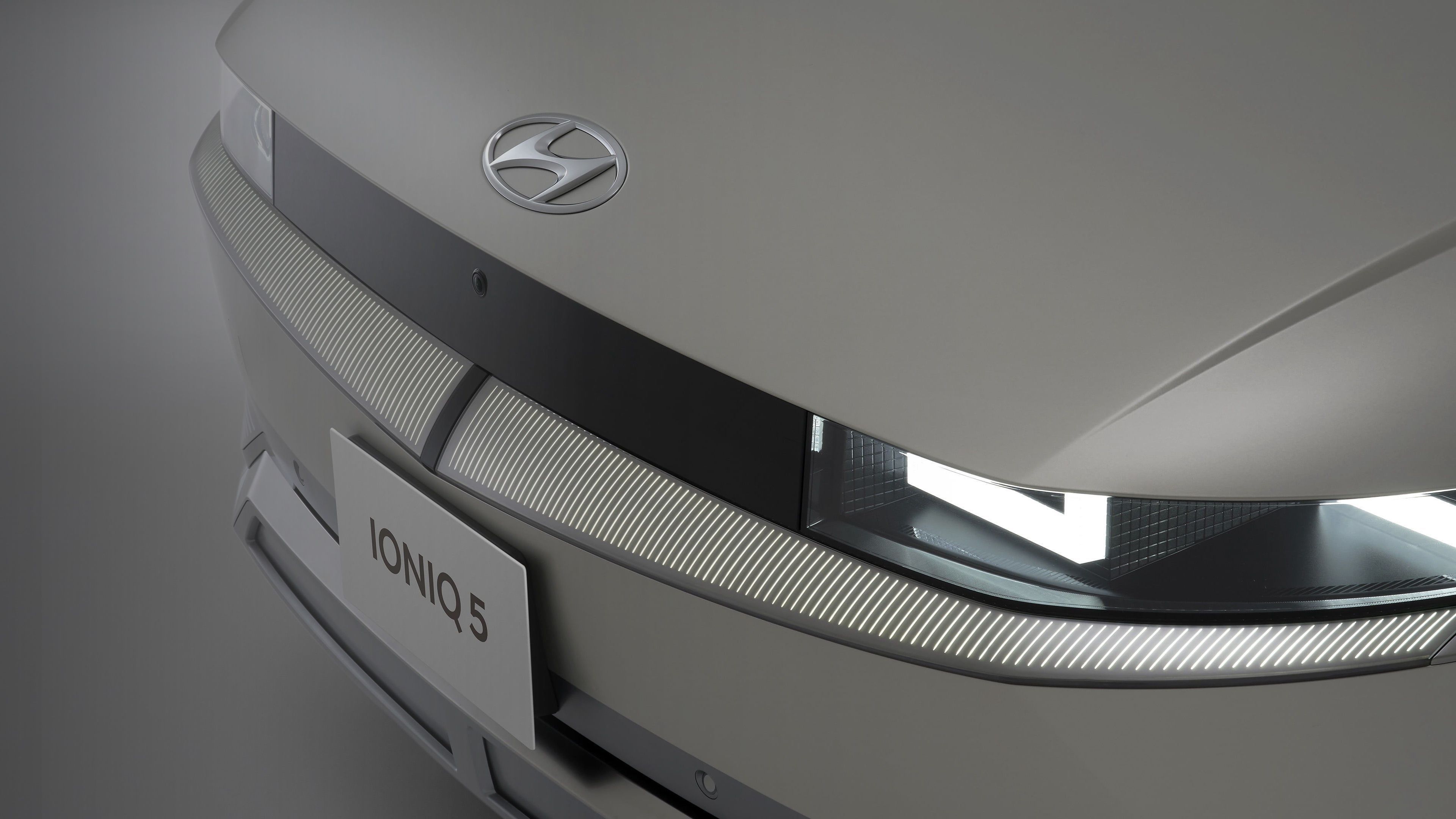
The Ioniq 5's exterior, inspired by Hyundai's 1975 Pony Coupe concept, turned heads when it arrived in 2021 — and it still does. The parametric pixel LED lighting, the flat slab sides, the squared-off proportions borrowed from the Pony Coupe: it was a statement, and it landed.
Four years on, that statement is beginning to show its vintage. The pixel aesthetic and the retro-futurist hard edges that felt fresh in 2021 now read as a specific moment in EV design — one that newer entries have already moved past. The Ioniq 5 still stands out in traffic, but where it once felt ahead of the conversation, it's starting to feel like a reference point rather than a frontier.
The 2025 facelift introduces updated bumpers, a subtle rear spoiler addition, and new wheel designs without touching the fundamentals. That restraint makes sense commercially — the design is still the car's strongest selling point. But it also means the underlying question about longevity gets deferred rather than answered.
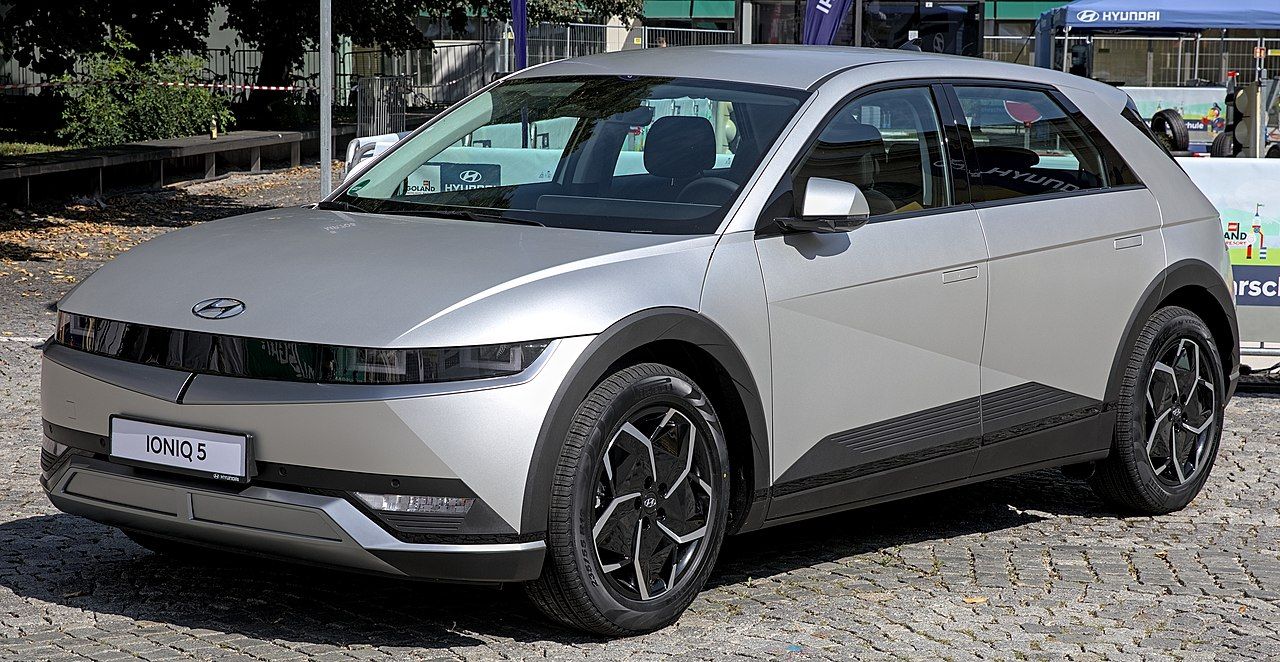
The Ioniq 5 is longer than it looks at 4,655 mm — the boxy proportions create an underestimated footprint in carparks — but in motion the car has a presence that no amount of spec-sheet comparison captures. This is one EV where the appearance contributes to daily ownership satisfaction in a way that more anonymous crossovers don't.
Ground clearance is reasonable at approximately 160 mm. Unlike the BYD Seal — which we reviewed previously — the Ioniq 5's crossover height means Singapore's multi-storey carparks present no meaningful concern.
What Hyundai Fixed Inside
The 2025 facelift's interior changes are more substantive than the exterior ones. The upgraded infotainment system — Hyundai's Connected Car Navigation Cockpit (ccNC) — brings a more fluid experience to the dual 12-inch screens and, importantly, now supports wireless Apple CarPlay and Android Auto. For buyers coming from the pre-facelift Ioniq 5, this is a meaningful upgrade; for buyers comparing against the Tesla Model Y, it removes a persistent competitive disadvantage.
Physical shortcut buttons have been added alongside the touchscreen — a move that acknowledges what many EV owners have been saying since touchscreen-only cabins became normalised. The steering wheel is redesigned and equipped with pixel-inspired light elements that echo the exterior lighting signature.
The interior space is the Ioniq 5's most consistent strength. The e-GMP platform's long 3,000 mm wheelbase (in a car that is only 4,655 mm long overall) creates rear legroom that is exceptional for the size class. The flat floor accommodates middle-seat passengers without the tunnel intrusion that non-skateboard EVs often retain. Seat comfort is above average at both the front and rear — the Ioniq 5 has always felt like a premium product from the inside in a way that not all EVs at this price point do.
The rear wiper — absent on the original Ioniq 5 and one of the most consistently requested additions — is now standard. That this took until the facelift is a separate conversation; what matters is that it's there.
One caveat on the interior: the charging speed indicator and some software functions feel less polished than they should for a car at this price point. The ccNC is an improvement over its predecessor, but the software experience is not class-leading in the way the hardware is.
800V in Practice
This is where the Ioniq 5 has a genuine and substantial advantage over most of its Singapore market competitors. The e-GMP platform's 800V architecture enables charging speeds that are currently unmatched in the Cat A EV bracket.
At a compatible 350 kW DC charger, the Ioniq 5 Standard Range (58 kWh) can charge from 10–80% in approximately 18 minutes. In Singapore's network, where most public DC chargers are in the 50–150 kW range, the practical benefit is less dramatic but still real: the Ioniq 5 charges faster at a given station than a 400V EV using the same charger. The car also supports ultra-fast charging at the highest-powered stations when available.
AC charging at 11 kW handles overnight top-up efficiently. The 58 kWh Standard Range variant takes approximately 6.3 hours for a full AC charge — efficient enough that a standard wallbox install at home removes most range management from the ownership equation.
V2L (Vehicle-to-Load) is available via the charging port — the Ioniq 5 can power external devices up to 3.6 kW, which is broadly useful for camping, events, and power outage scenarios.
The charging architecture is the Ioniq 5's clearest competitive advantage over its closest rivals. For buyers who regularly use public DC charging, the 800V system's speed advantage is meaningful across a full COE cycle.
On Singapore Roads
The driving experience is composed and comfortable without being particularly exciting. This is the honest summary of the Standard Range variant, and it is not a criticism.
The 107 kW motor produces 350 Nm from rest. The Ioniq 5 feels upright and SUV-like through corners, with a higher seating position than a sport sedan. The ride is well-calibrated for Singapore's varied road surfaces — firm enough to feel controlled, soft enough to absorb the irregular patches that older roads occasionally present.
The e-GMP platform's rigidity translates into good high-speed composure. The Ioniq 5 goes where directed with unremarkable competence, which is exactly what the majority of Singapore's daily driving requires.
Noise levels are good but not exceptional. The 2025 facelift's improved NVH work has reduced the cabin intrusion that some original Ioniq 5 owners noted, particularly at expressway speeds. It's quieter than the pre-facelift version; it is not as quiet as the BYD Seal at similar speeds.
The Highway Driving Assist II (HDA II) — Hyundai's adaptive cruise with lane centring — is capable and useful on Singapore's expressways. It requires more monitoring than Tesla's Autopilot and is less confident in lane changes, but it is competent for the majority of expressway use cases and most owners engage it regularly.

The Cat A Question
The Standard Range variant (58 kWh, 107 kW, Cat A) is the configuration available at entry level and the one most buyers will consider. It covers Singapore's practical requirements adequately.
Ioniq 5 Standard Range (107 kW, 58 kWh, Cat A):
- WLTP range: 384 km; real-world Singapore: ~350–370 km
- DC charging: up to 350 kW capable (10–80% in ~18 minutes at compatible station)
- AC charging: 11 kW (~6.3 hours for full charge)
- 0–100 km/h: approximately 8.5 seconds
The Long Range variants — 77 kWh, Cat B — extend range significantly and add the option of AWD in the Inspiration trim. These are for buyers who want the extended range buffer or the all-wheel-drive traction.
At the price point for the Standard Range, the Ioniq 5 sits alongside the BYD Seal Dynamic and the Tesla Model Y RWD 110. All three are competent Cat A EVs. The Ioniq 5 offers the fastest charging, the largest interior space relative to exterior size, and the most distinctive design. The BYD Seal offers better value density and a more refined sedan driving experience. The Tesla Model Y offers the best charging infrastructure and the most mature ADAS suite. The choice is a genuine one, not a foregone conclusion.
Range in Singapore: What to Expect
The Standard Range's 384 km WLTP converts to approximately 350–370 km in Singapore driving — consistent air conditioning, mixed urban and expressway use. This is a somewhat tighter real-world buffer than the BYD Seal Dynamic (340–380 km from a 460 km WLTP) or the Tesla Model Y RWD 110 (370–420 km from a 466 km WLTP), reflecting the smaller battery.
In practice, for daily Singapore distances of 30–60 km, the difference is irrelevant — a weekly charging routine covers it comfortably. For longer runs, the Ioniq 5's charging speed advantage partly compensates for its smaller battery; a 20-minute top-up at a 100 kW station adds more range per minute than most 400V competitors manage.
Energy consumption in Singapore conditions is approximately 15–16 kWh/100 km. Eco mode with Level 3 regeneration extends range toward 400 km for disciplined drivers.
Between the variants, I'd take the AWD Standard Range — the 800V charging is most useful when you need it, and the extra motor adds real confidence on wet roads. Pure city driving? The RWD saves money without meaningful sacrifice.
The Case For It
The Hyundai Ioniq 5 is a well-engineered, well-built EV from a manufacturer with a long track record in Singapore and an established service network. The 2025 facelift addresses the original's most legitimate criticisms — particularly the infotainment software and the missing rear wiper — without altering what made the car appealing in the first place.
What it offers that no other Cat A EV in Singapore currently matches: 800V ultra-fast charging, a distinctive design, and interior space that belongs in a larger vehicle class. These are real advantages for real use cases.
What gives pause: the real-world range is tighter than some rivals from a smaller battery; the software experience, while improved, lags behind the best in class; and the value-per-dollar comparison against the BYD Seal or newer Chinese market entrants requires more justification from the buyer. The Ioniq 5 costs more to deliver less range than some alternatives, and that requires either the design to resonate, or the charging infrastructure advantage to matter in your specific ownership pattern.
For the buyer who responds to the design, relies on public DC charging, or specifically wants Hyundai's build quality and service network behind them, the Ioniq 5 makes a clear case. For the buyer making a purely rational comparison on value and specification, the field is more competitive than it was when the Ioniq 5 first launched.
Related Articles

Kia EV6 (2025): All the Right Angles
The facelifted Kia EV6 pairs sharper styling with an 84 kWh battery and 800V charging — and remains the most visually striking crossover EV at its price point. It's also the one you'll most enjoy driving. Whether that's enough depends on what you're willing to trade for it.

Hyundai Ioniq 6 (2025) Review: Aerodynamics With a Point to Prove
The Hyundai Ioniq 6 is among the most efficient EV sedans you can buy in Singapore — 800V charging, a 0.21 Cd drag coefficient, and four variants starting from Cat A. With the Tesla Model 3 as the obvious benchmark, the Ioniq 6 makes its case on efficiency and refinement rather than outright speed.

BYD Dolphin (2025): The Cat A Entry Point That Doesn’t Feel Like a Compromise
The BYD Dolphin is the most affordable EV in Singapore that still feels like a complete car. It makes the compromises you'd expect at this price point intelligently — delivering enough range, space, and technology for buyers who don't need to spend more.
Stay Charged Up
Get the latest EV news, reviews, and analysis delivered to your inbox every week.