Stay Charged Up
Get the latest EV news, reviews, and analysis delivered to your inbox every week.
Get the latest EV news, reviews, and analysis delivered to your inbox every week.
The same 40 kWh can cost $15 at one charger and $27 at another. We mapped every major network's pricing so you know exactly what you're paying before you plug in.
Kiat Goh
Charging a typical 60 kWh EV in Singapore costs between S$27 and S$50 on the public network. But the number that most drivers carry in their heads — the "cheap" S$0.45/kWh AC rate — is rarer than you might think.
revolt.sg tracks more than 2,600 public charging locations across Singapore. Analysing that network as of March 2026: the median AC charging rate is S$0.675/kWh, and only around 40 connections (0.5% of the AC network) are priced at S$0.50/kWh or below. The cheapest tier exists — but it's the exception, not the norm. Here's how the tiers work — and for the latest weekly figures as rates change, see the Singapore EV Charging Price Index.
Across Singapore's public charging network, prices fall into three broad tiers:
AC charging (7–22 kW)
DC fast charging (50–149 kW)
Ultra-fast DC (150 kW+)
The ultra-fast tier being cheaper than standard fast DC isn't a data error — it reflects where in Singapore these chargers tend to sit. Several high-power installations are at less commercially premium locations, or are priced to compete for a smaller pool of compatible vehicles.
Price per kWh only tells half the story. The other half is how fast the electrons go in — and that determines whether a charging stop fits into your schedule or defines it.
How long does a full charge take?
For a typical 60 kWh EV starting near empty:
| Tier | Charger speed | Time to 80% | Full charge |
|---|---|---|---|
| AC slow | 7 kW | ~6.5 hrs | ~9 hrs |
| AC standard | 11 kW | ~4.5 hrs | ~6 hrs |
| AC fast* | 22 kW | ~2.5 hrs | ~3 hrs |
| Fast DC | 50–100 kW | 40–70 mins | 70–90 mins |
| Ultra-Fast DC | 150 kW+ | ~20 mins | ~30 mins |
Most EVs cap AC acceptance at 11 kW regardless of charger speed — check your car's spec before assuming you'll get 22 kW
What does 30 minutes buy you?
| Tier | Range added | Cost (at median rate) | Best used for |
|---|---|---|---|
| AC 7 kW | ~25 km | ~S$3.90 | Slow top-up while parked for hours |
| AC 11 kW | ~38 km | ~S$6.10 | Same — slightly faster |
| Fast DC 50 kW | ~130–150 km | ~S$19 | Meaningful top-up on the go |
| Fast DC 100 kW | ~220–250 km | ~S$19 | Most of a full charge |
| Ultra-Fast DC 150 kW+ | ~280–320 km | ~S$18 | Nearly full in a coffee break |
Assumes 16 kWh/100 km consumption; real-world varies by model and driving style
The "desperate need" scenario — 30 minutes on DC:
If you're running low and need range fast, 30 minutes on a 50 kW DC charger adds roughly 130–150 km for around S$19 — enough to cover most of a day's driving in Singapore. Ultra-fast DC (150 kW+) can add close to 300 km in the same 30 minutes for roughly the same cost, because the median ultra-fast rate is actually lower than regular DC fast.
The practical implication:
The same charging operator can price very differently across its own network. A charger at a retail mall drawing footfall may cost significantly less than one at a premium commercial tower treating EV charging as a revenue line. The gap between the cheapest and most expensive AC charger on the same operator's network can exceed S$0.20/kWh — a S$12 difference on a full charge.
This means the question "which operator is cheapest?" is the wrong one. The right question is "which location is cheapest for my regular routes?" — and that answer varies by area, by time of day, and by whether the site is trying to attract you or charge you.
The cheapest accessible AC locations in Singapore — at S$0.45/kWh — are typically retail destinations and lifestyle venues. The most expensive tend to be premium carparks and hotel facilities. The data reflects this clearly: the median rate of S$0.675/kWh is pulled toward the higher end by the large number of commercial carpark chargers, while budget-minded drivers who seek out retail charging locations can reliably find rates closer to S$0.45–0.50/kWh.
We've been building out location-specific guides by area to map where the cheapest public chargers actually are:
More area guides are being added as we cover more of the island.
The more meaningful comparison is cost per kilometre, not kWh price in isolation.
A typical petrol car covers 8–10 km per litre. At around S$2.50/litre for 95-octane, that's S$0.25–0.31/km.
An EV consuming 15–18 kWh per 100 km at Singapore's real charging rates:
| Charging tier | Typical rate | Cost per 100 km | Cost per km |
|---|---|---|---|
| AC — cheapest locations | S$0.45–0.50/kWh | S$6.75–9.00 | S$0.07–0.09 |
| AC — median (S'pore network) | S$0.675/kWh | S$10.13–12.15 | S$0.10–0.12 |
| Fast DC (50–150 kW) — median | S$0.774/kWh | S$11.61–13.93 | S$0.12–0.14 |
| Fast DC — expensive locations | S$0.83/kWh | S$12.45–14.94 | S$0.12–0.15 |
| Ultra-Fast DC (150 kW+) — median | S$0.728/kWh | S$10.92–13.10 | S$0.11–0.13 |
| Petrol (95-octane) | ~S$2.50/litre | S$25.00–31.25 | S$0.25–0.31 |
Even charging entirely at the network median — not the cheapest locations, just average — an EV costs roughly half what a petrol car does per kilometre. At the cheapest public AC locations, the gap is closer to three or four times cheaper.
Singapore's electricity tariff is reviewed quarterly. Q1 2026 sits at S$0.2671/kWh before GST, but global LNG prices rose sharply through early 2026. The Q2 tariff (effective April 1) is expected to rise by 10–15%.
How quickly this flows through to public charging prices depends on each operator's energy contracts. Some have held rates stable for extended periods; others have adjusted more closely with underlying energy costs. If the increase is passed through in full, median public AC could edge above S$0.73/kWh and median DC fast could approach S$0.85/kWh — still well below petrol on a per-km basis, but a meaningful change in absolute terms.
For a full breakdown, see our April 2026 electricity tariff analysis.
What is the average EV charging cost in Singapore?
Based on revolt.sg's live database of more than 2,600 locations (March 2026): the median AC charging rate is S$0.675/kWh and the median DC fast charging rate is S$0.774/kWh. A full 60 kWh charge at the median AC rate costs around S$40.50.
What's the cheapest EV charging in Singapore?
The cheapest publicly accessible AC chargers in Singapore run around S$0.45/kWh — found primarily at retail and lifestyle destinations. These represent roughly 0.5% of all AC connections on the network. See our area-specific charging guides for the cheapest spots near you.
Is EV charging cheaper than petrol in Singapore?
Yes — across every public charging tier. At the median AC rate (S$0.675/kWh), an EV costs around S$0.10–0.12/km vs S$0.25–0.31/km for petrol. Even at the most expensive public DC rates, the EV is roughly half the per-km cost.
Is fast DC charging more expensive than AC?
Generally yes — DC fast charging has a median rate of S$0.774/kWh vs S$0.675/kWh for AC. However, ultra-fast DC (150 kW+) has a lower median (S$0.728/kWh) than regular DC fast, because many high-power installations are at less commercially premium sites.
Will EV charging prices go up in April 2026?
The Q2 2026 electricity tariff is expected to rise 10–15%. Whether operators pass this through varies. See our April 2026 tariff deep-dive for operator-by-operator analysis.
Prices change, new locations open, and the network is growing. The most reliable way to find current pricing and availability is live data.
The revolt.sg charger map lets you search by location, filter by speed and operator, and see what a session will cost for your car. The chat on that page can answer specific questions — cheapest charger near a destination, best AC option in a given area, estimated cost for your battery size.
The network statistics in this article use March 2026 as a baseline. Rates change as operators adjust pricing and new locations open. For the current weekly figures — median rates, week-on-week movement, and the cheapest locations right now — see the Singapore EV Charging Price Index, which is updated every Monday from the same live database.
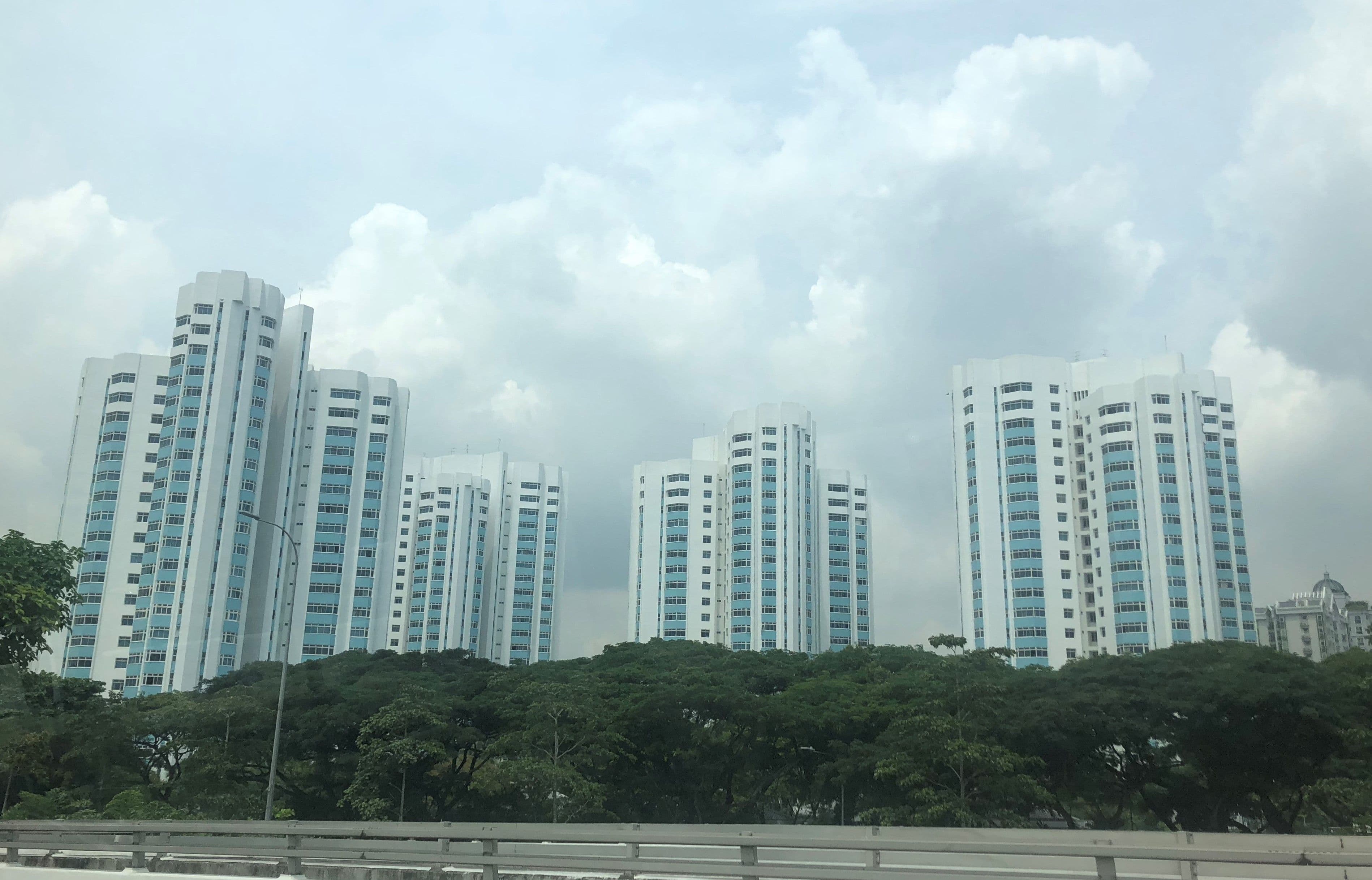
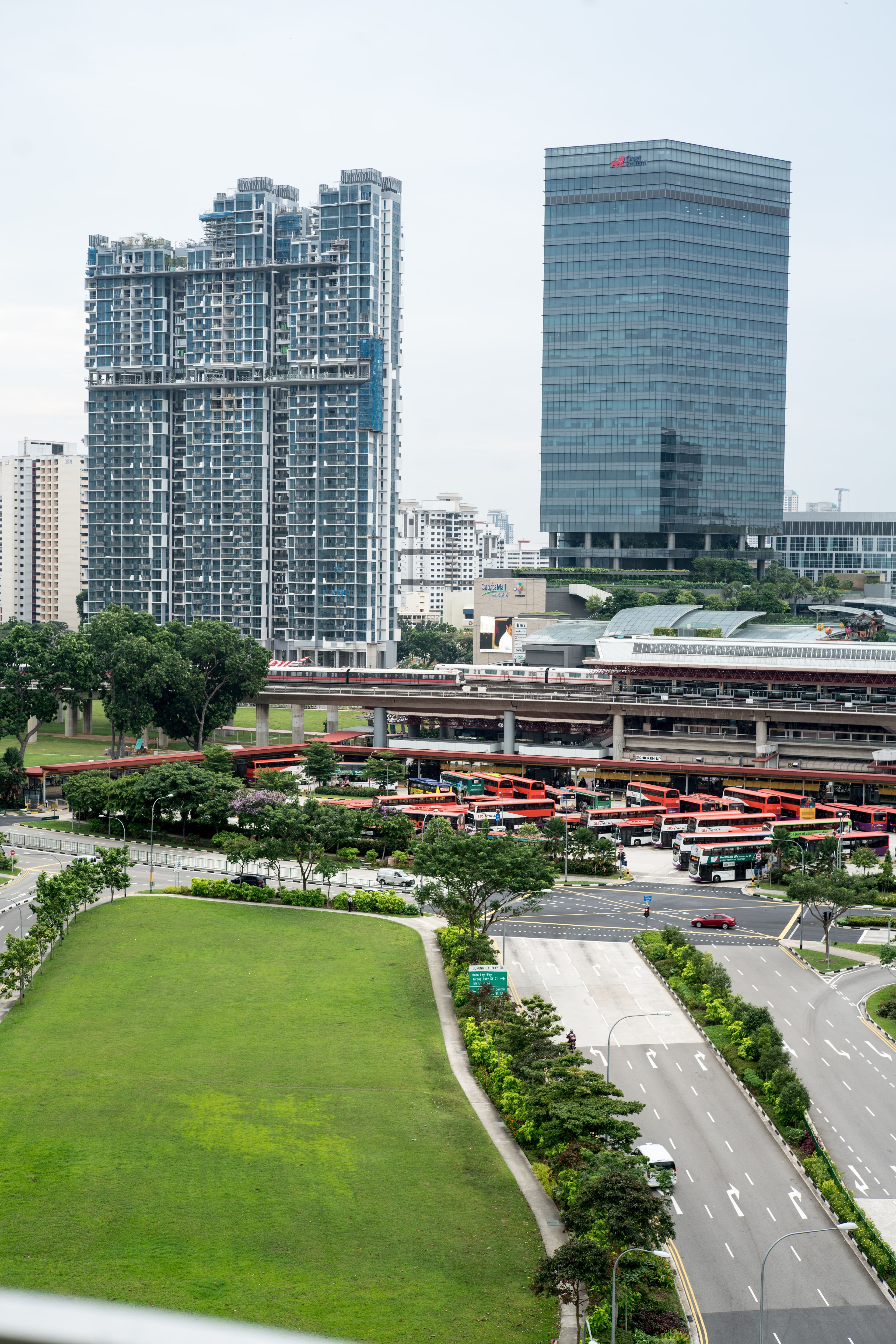
Jurong East has chargers in every mall, but the cheapest rate in the west isn't in a shopping centre at all. Here's what you'll actually pay.
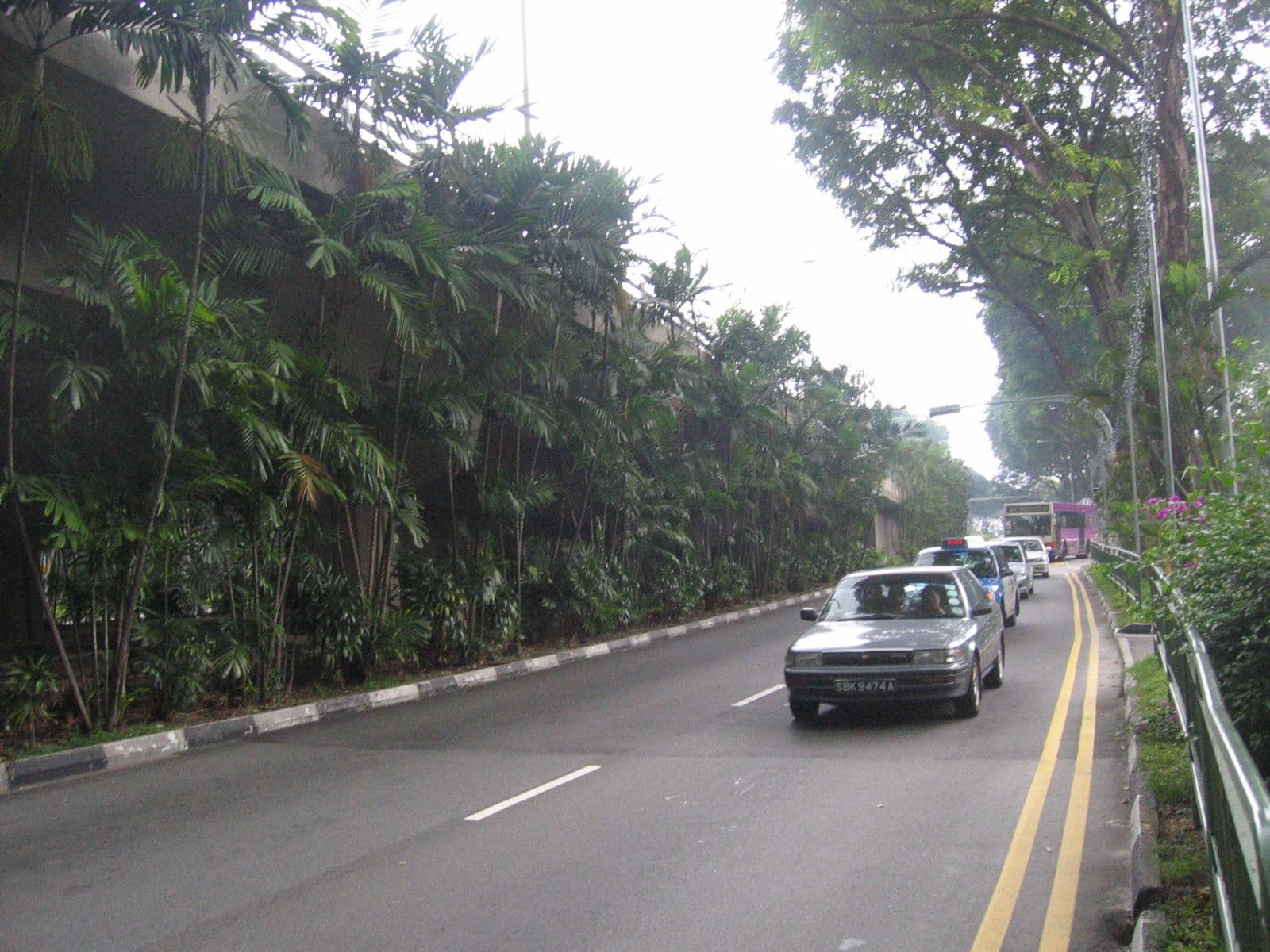
Bukit Timah and the Dunearn corridor have no shortage of EV chargers — but the gap between the cheapest and most expensive options is stark. Here's where to charge, what to avoid, and how to keep your wallet happy in one of Singapore's most EV-dense neighbourhoods.