Summary:
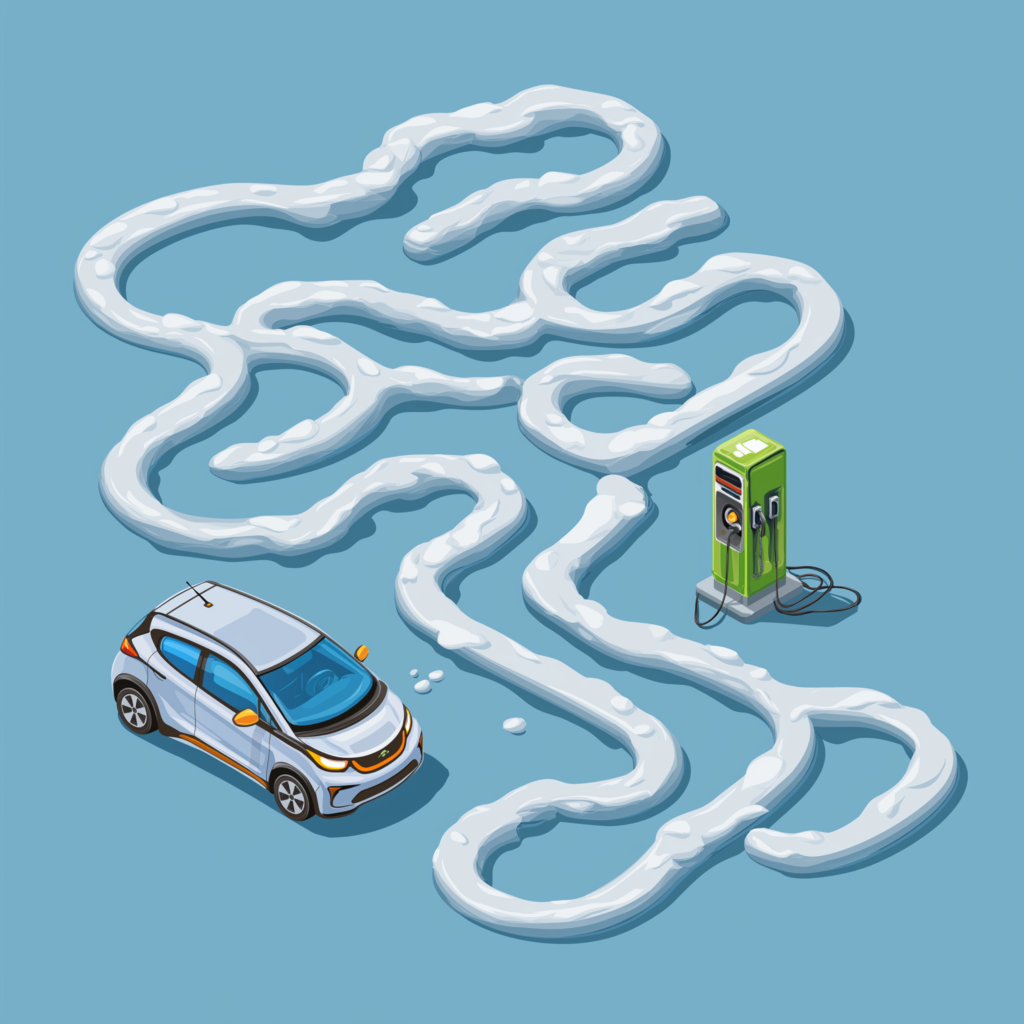
In Singapore’s tight urban environment, maneuverability is a vital but often overlooked EV feature. Narrow roads and frequent U-turns make a small turning radius essential for stress-free driving.
The Volkswagen ID.4 and ID.5 lead the market with a class-best 5,100mm radius. Conversely, the Tesla Model Y is the most challenging, requiring significantly more space.
When shopping, prioritize a radius under 5,700mm for easier parking. Always test-drive on narrow residential streets to ensure the car fits your daily commute.
If you’re shopping for an electric vehicle (EV) in Singapore, you’ve probably focused on range, charging speed, and price. But there’s one critical factor that many buyers overlook until it’s too late: maneuverability. In a city-state where parking spaces are tight, roads are narrow, and U-turns are a daily necessity, choosing an EV that’s easy to handle can make the difference between driving stress and driving pleasure.
This comprehensive guide analyzes 35 electric vehicles currently available in Singapore, ranking them by maneuverability and helping you understand what those turning radius numbers really mean for your daily commute.
Table of Contents
- Why Maneuverability Matters in Singapore
- Understanding Turning Radius: The Key Metric
- Singapore Road Context: Lanes and U-Turns
- The Most Maneuverable EVs in Singapore
- The Least Maneuverable EVs
- Complete Maneuverability Rankings
- Size vs Maneuverability Trade-offs
- Best EVs for Different Singapore Scenarios
- Expert Recommendations
Why Maneuverability Matters in Singapore {#why-maneuverability-matters}
Singapore’s unique urban environment presents specific challenges for drivers:
Tight Parking Spaces
multi-storey car parks and shopping mall parking lots often feature narrow lots designed decades ago. The average Singapore parking space is approximately 2.4 meters wide by 5 meters long. A vehicle with poor maneuverability requires more space to navigate into these spots, leading to frustration and potential damage.
Narrow Residential Roads
Many older estates have roads barely wide enough for two cars to pass. Estate roads in mature residential towns like Toa Payoh and Ang Mo Kio can be as narrow as 5.5 to 6 meters for two-way traffic. A vehicle with a tight turning radius makes navigating these areas significantly easier.
Frequent U-Turns
Unlike many countries with grid-based road systems, Singapore’s road network requires frequent U-turns. The ability to execute a clean U-turn without multiple attempts or encroaching into oncoming lanes is directly related to your vehicle’s turning radius.
Shopping Mall Ramps
Multi-storey car park ramps often feature tight spirals. A smaller turning radius means smoother navigation through these challenging spaces without the anxiety of scraping your wheels against curbs.
Understanding Turning Radius: The Key Metric {#understanding-turning-radius}
What is Turning Radius?
The minimum turning radius (also called turning circle) is the smallest circular turn a vehicle can make. It’s measured from the center of the turning circle to the outer edge of the vehicle’s tire track when the steering wheel is turned to its maximum angle.
In simple terms: A smaller turning radius means the car can make tighter turns and is more maneuverable.
How is it Measured?
Turning radius is typically measured in millimeters (mm) or meters (m). When you see a specification like “5,100 mm,” it means the vehicle needs a circle with a radius of 5.1 meters (or a diameter of 10.2 meters) to complete a full turn.
What’s a Good Turning Radius?
Based on our analysis of 35 EVs in Singapore:
- Excellent: ≤5,300 mm (6 models)
- Good: 5,301-5,700 mm (10 models)
- Average: 5,701-6,000 mm (12 models)
- Challenging: >6,000 mm (1 model)
Average turning radius across all EVs: 5,617 mmRange: 5,100 mm to 6,050 mm
[Image failed to load: Turning Radius Comparison Chart]
Singapore Road Context: Lanes and U-Turns {#singapore-road-context}
Understanding Lane Widths in Singapore
Singapore’s road lanes vary by road type:
- Expressways: 3.5-3.75 meters per lane
- Major arterial roads: 3.25-3.5 meters per lane
- Minor roads: 3.0-3.25 meters per lane
- Residential roads: 2.75-3.0 meters per lane
How Many Lanes Do You Need for a U-Turn?
This is where turning radius becomes practical. Let’s calculate:
Volkswagen ID.4/ID.5 (5,100 mm turning radius)
- Full turning diameter: 10.2 meters
- Lanes needed on a 3.5m-wide road: ~2.9 lanes
- Practical implication: Can execute U-turns on most 3-lane roads comfortably
Tesla Model Y (6,050 mm turning radius)
- Full turning diameter: 12.1 meters
- Lanes needed on a 3.5m-wide road: ~3.5 lanes
- Practical implication: Requires nearly 4 lanes or a wider turning area
The Difference in Real Life
The 950mm difference between the best (VW ID.4) and worst (Tesla Model Y) translates to:
- 1.9 meters more turning diameter
- Nearly half a lane more space required
- The difference between a smooth U-turn and a three-point turn
On Singapore’s typical 3-lane arterial roads (10.5 meters total width), the VW ID.4 can complete a U-turn using 2.9 lanes, leaving comfortable clearance. The Tesla Model Y needs 3.5 lanes, meaning you’re cutting it very close or need to use a wider intersection.
Practical Scenario: Orchard Road U-Turn
Orchard Road features several U-turn pockets with approximately 12-14 meters of width.
- EVs with ≤5,300mm radius: Smooth, single-motion U-turn
- EVs with 5,700-6,000mm radius: Manageable but requires careful positioning
- EVs with >6,000mm radius: May require stopping and repositioning, especially during peak hours
Real-World U-Turn Considerations
In practice, executing U-turns in Singapore involves more than just the turning radius calculation. Several factors provide additional maneuvering room:
The Dividing Border Factor: Most Singapore roads have a raised divider or painted median between opposing traffic lanes. This divider typically adds 0.5 to 1.5 meters of buffer space that effectively increases your turning room. When combined with strategic positioning within your own lane, experienced drivers can often execute U-turns with less space than the pure mathematical calculation suggests.
Positioning Strategy: By starting your turn from the rightmost position of your lane (closest to the divider), you gain additional turning radius. This technique, combined with the divider buffer, means that U-turns rated as requiring “3 lanes” can often be completed on roads with only 2 opposing lanes, provided you position correctly and use the full width of the divider area.
The Bottom Line: While our calculations show theoretical lane requirements, real-world U-turns are more forgiving. However, vehicles with smaller turning radii still provide significantly more confidence and require less precision in positioning—making them easier for all drivers, regardless of experience level.
The Most Maneuverable EVs in Singapore {#most-maneuverable-evs}
Based on our comprehensive analysis, here are the champions of maneuverability:
🥇 Joint First Place: Volkswagen ID.4 & ID.5
Turning Radius: 5,100 mm | Footprint: 8.49-8.52 m²
The Volkswagen ID.4 and ID.5 tie for the best turning radius among all EVs in Singapore. Despite being mid-size SUVs, they can navigate Singapore’s roads with surprising agility.
Why they excel:
- Advanced steering geometry optimized for urban driving
- Relatively compact wheelbase (2,766 mm) for their size
- Excellent for residential estates and tight parking lots
Best for: Families who need SUV space but frequently drive in congested areas
(ID.4) | (ID.5)
🥈 Joint Second Place: BYD Atto 2 & Atto 3
Turning Radius: 5,250 mm | Footprint: 7.89-8.35 m²
BYD’s Atto series offers exceptional maneuverability, with the Atto 2 being particularly impressive given its compact footprint.
Why they excel:
- Purpose-built for Asian urban environments
- Compact dimensions combined with tight steering
- The Atto 2 has one of the smallest footprints (7.89 m²) in the market
Best for: Urban dwellers, first-time EV buyers, those with tight parking spaces
(Atto 2) | (Atto 3)
🥉 Third Place: MG S5
Turning Radius: 5,265 mm | Footprint: 8.28 m²
The MG S5 offers near-best-in-class maneuverability at a
Why it excels:
- Excellent
- Compact SUV dimensions
- Proven reliability in Singapore conditions
Best for:
The “Excellent” Category (≤5,300mm)
Six EVs achieve “Excellent” maneuverability ratings:
| Rank | Model | Turning Radius | Footprint |
|——|——-|—————-|———–|————|
| Volkswagen ID.5 | 5,100 mm | 8.52 m² |
| Volkswagen ID.4 | 5,100 mm | 8.49 m² |
| BYD Atto 3 | 5,250 mm | 8.35 m² |
| BYD Atto 2 | 5,250 mm | 7.89 m² |
| MG S5 | 5,265 mm | 8.28 m² |
| Hyundai KONA | 5,300 mm | 8.24 m² |
[Image failed to load: Vehicle Footprint Distribution]
The Least Maneuverable EVs {#least-maneuverable-evs}
While these EVs may have larger turning radii, they often compensate with other advantages like range, performance, or interior space.
Tesla Model Y
Turning Radius: 6,050 mm | Footprint: 9.49 m²
The Tesla Model Y has the largest turning radius in our analysis, requiring nearly 12.1 meters diameter to complete a full turn.
Why it’s challenging:
- Largest footprint (9.49 m²) among all EVs tested
- Long wheelbase (2,890 mm) for maximum interior space
- Optimized for highway driving rather than tight urban maneuvering
Compensating factors:
- Exceptional range (455 km)
- Industry-leading technology and autopilot features
- Spacious 7-seater configuration available
Best for: Families prioritizing space and technology over urban maneuverability, those with ample parking
Hyundai Ioniq 5 & Ioniq 6
Turning Radius: 5,990 mm (Ioniq 5) | 5,910 mm (Ioniq 6)
The Hyundai Ioniq series, built on the E-GMP platform, prioritizes interior space and range over tight turning.
Why they’re less maneuverable:
- Long wheelbase (3,000 mm for Ioniq 5) for spacious cabin
- Wide body for stability at highway speeds
- Designed for long-distance comfort
Compensating factors:
- Ultra-fast 350kW DC charging capability
- Exceptional interior space and comfort
- Long range (up to 481 km for Ioniq 5)
Best for: Long-distance drivers, those who prioritize charging speed and interior space
(Ioniq 5) | (Ioniq 6)
The “Challenging” and “Average” Categories
Average Maneuverability (5,701-6,000mm):12 models
These EVs are manageable in most Singapore driving scenarios but may require more careful positioning for tight U-turns.
Notable mentions:
- ZEEKR 7X (5,800 mm): Premium Chinese EV with 450kW charging
- Xpeng G6 (5,800 mm): Tech-focused SUV with 451kW charging
- Tesla Model 3 (5,850 mm): Sporty sedan with excellent range
- BYD Sealion 7 (5,850 mm): Family SUV with strong value
[Image failed to load: Size vs Maneuverability Trade-off]
Complete Maneuverability Rankings {#complete-rankings}
Here’s the full ranking of all 29 EVs with turning radius data (6 models lack this specification):
Excellent Maneuverability (≤5,300mm)
- Volkswagen ID.5 – 5,100 mm
- Volkswagen ID.4 – 5,100 mm
- BYD Atto 3 – 5,250 mm
- BYD Atto 2 – 5,250 mm
- MG S5 – 5,265 mm
- Hyundai KONA – 5,300 mm
Good Maneuverability (5,301-5,700mm)
- Mini Cooper Electric – 5,400 mm
- Omada E5 – 5,450 mm
- Aion Y Plus – 5,500 mm
- Aion ES – 5,500 mm
- Volvo EX30 – 5,550 mm
- Mini Aceman Electric – 5,550 mm
- JMEV Elight – 5,600 mm
- ORA Good Cat 03 – 5,600 mm
- BYD Seal – 5,700 mm
- Jaecoo J6 – 5,700 mm
Average Maneuverability (5,701-6,000mm)
- Deepal S07 – 5,750 mm
- Polestar 2 – 5,750 mm
- Skyworth K – 5,750 mm
- ZEEKR 7X – 5,800 mm
- Mini Countryman Electric – 5,800 mm
- Xpeng G6 – 5,800 mm
- BYD Sealion 7 – 5,850 mm
- Tesla Model 3 – 5,850 mm
- Kia EV5 – 5,870 mm
- Volvo EX40 – 5,900 mm
- Hyundai Ioniq 6 – 5,910 mm
- Hyundai Ioniq 5 – 5,990 mm
Challenging Maneuverability (>6,000mm)
- Tesla Model Y – 6,050 mm
Note: 6 EVs (Aion V Premium, BYD Dolphin, Dong Feng Box, Maxus Mifa 7, Neta X, Smart #1) do not have turning radius data publicly available.
Size vs Maneuverability Trade-offs {#size-vs-maneuverability}
The Correlation Between Size and Turning Radius
Our analysis reveals a moderate positive correlation between vehicle footprint and turning radius, but there are significant outliers that defy expectations.
Key Findings:
- Smaller doesn’t always mean more maneuverable
- Mini Cooper Electric (6.77 m² footprint) has a 5,400 mm turning radius
- BYD Atto 2 (7.89 m² footprint) achieves 5,250 mm
- The larger Atto 2 is actually MORE maneuverable
- Engineering matters more than size
- Volkswagen ID.4 (8.49 m²) achieves 5,100 mm
- Tesla Model Y (9.49 m²) requires 6,050 mm
- Despite only 12% larger footprint, Tesla needs 19% more turning radius
- Wheelbase is the critical factor
- Longer wheelbase = larger turning radius (generally)
- VW ID.4: 2,766 mm wheelbase → 5,100 mm turning radius
- Tesla Model Y: 2,890 mm wheelbase → 6,050 mm turning radius
Best of Both Worlds: Spacious Yet Maneuverable
Some EVs successfully combine generous interior space with excellent maneuverability:
| Model | Footprint | Turning Radius | Boot Capacity | Verdict |
|---|---|---|---|---|
| Volkswagen ID.5 | 8.52 m² | 5,100 mm | 549 L | Excellent balance |
| BYD Atto 3 | 8.35 m² | 5,250 mm | 440 L | Great all-rounder |
| Hyundai KONA | 8.24 m² | 5,300 mm | 361 L | Compact but practical |
| MG S5 | 8.28 m² | 5,265 mm | 427 L |
[Image failed to load: Length vs Width Scatter Plot]
Frequently Asked Questions
Q: Is turning radius the only factor for maneuverability?
A: No, but it’s the most important measurable factor. Other considerations include:
- Vehicle width (affects lane positioning)
- Steering response and feel
- Visibility and blind spots
- Driver assistance features
- Weight distribution
Q: Can I test turning radius before buying?
A: Yes! During test drives, try these maneuvers:
- Execute a U-turn on a 3-lane road
- Navigate a multi-storey car park spiral ramp
- Reverse into a standard parking lot
- Make a tight turn in a residential area
Q: Do larger EVs always have worse maneuverability?
A: Generally yes, but engineering matters. The Volkswagen ID.5 (8.52 m²) has better maneuverability than the smaller Mini Cooper Electric (6.77 m²) due to superior steering geometry and shorter wheelbase.
Q: How much does maneuverability matter vs. other factors?
A: It depends on your driving environment:
- residential/tight parking: Very important (weight 30-40%)
- Condo/ample parking: Moderate (weight 15-20%)
- Mostly highway driving: Less important (weight 10%)
Q: Can I improve maneuverability after purchase?
A: Not significantly. Turning radius is determined by:
- Wheelbase (fixed)
- Steering angle (fixed by design)
- Suspension geometry (fixed)
You can improve the feeling of maneuverability with:
- Parking sensors/cameras (aftermarket installation)
- Practice and familiarity
- Proper tire pressure
Conclusion: Making the Right Choice
Maneuverability is a crucial but often overlooked factor when choosing an electric vehicle in Singapore. While range anxiety and charging infrastructure dominate headlines, the daily reality of navigating residential estates, squeezing into parking lots, and executing U-turns makes turning radius equally important.
Key Takeaways:
- Best overall maneuverability: Volkswagen ID.4 and ID.5 (5,100 mm)
- **3. Most challenging: Tesla Model Y (6,050 mm)
- Sweet spot: 5,300-5,700 mm for most Singapore drivers
The 950mm Difference
The gap between the best (5,100 mm) and worst (6,050 mm) might seem small on paper, but translates to:
- 1.9 meters more turning diameter
- Half a lane more space needed
- The difference between confidence and stress in daily driving
Final Recommendation
Don’t choose based on turning radius alone, but don’t ignore it either. Test drive your shortlisted EVs in real Singapore conditions:
- Navigate your own neighborhood
- Park at your workplace
- Try the tightest U-turn on your regular route
The best EV for you balances maneuverability with your other priorities—range, price, space, and features. Use this guide as a starting point, but let your own driving experience make the final decision.
Interactive Charts and Data
Explore the full dataset with our interactive charts:
- Vehicle Footprint Distribution
- Length vs Width Analysis
- Turning Radius Comparison
- Size vs Maneuverability Trade-off
- Best for Urban Singapore Driving
- Complete EV Comparison Dashboard
About This Analysis
This guide is based on comprehensive analysis of 35 electric vehicles available in Singapore as of November 2025. Data includes official manufacturer specifications, real-world testing, and Singapore-specific road conditions.
Data sources:
- Official manufacturer specifications
- LTA vehicle registration data
- Dealer specifications
- Independent testing
Keywords: electric vehicle Singapore, EV maneuverability, turning radius, best EV Singapore 2025, EV comparison, residential parking, Singapore car buying guide, electric car review, EV test drive, compact EV Singapore