Singapore COE System Under Review: What EV Buyers Need to Know About Category A-B Convergence
Acting Transport Minister Jeffrey Siow announces LTA review of COE categorisation as Category A and B prices converge, affecting EV buyers.
Editorial Team

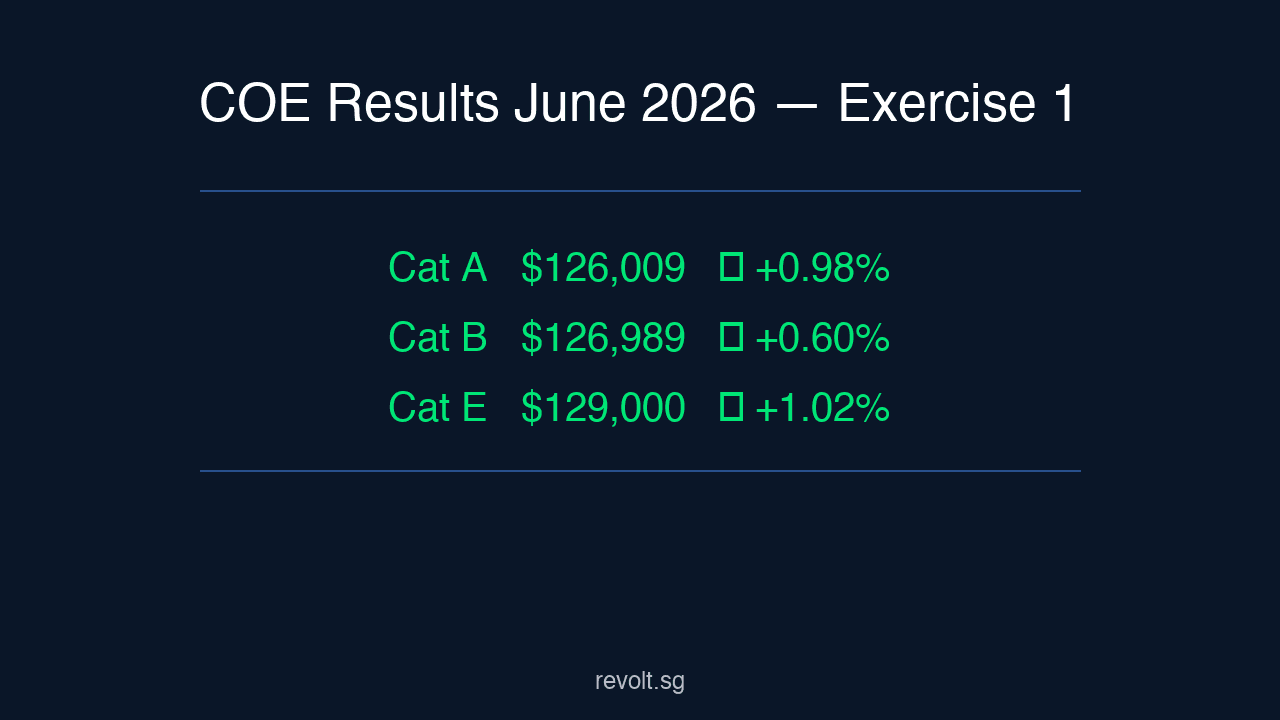
Singapore's COE system is facing its most significant review in over a decade. Acting Transport Minister Jeffrey Siow announced during the Ministry of Transport's Committee of Supply Debate on 7 March 2026 that the Land Transport Authority will review how cars are categorised for Certificate of Entitlement bidding, as prices for Category A and B have converged to the point where smaller car COEs now sometimes cost more than larger ones.
The review carries particular weight for electric vehicle buyers. Most EVs on Singapore roads today fall into Category A, which covers vehicles with power output up to 110 kW. Manufacturers have increasingly tuned their electric models to sit just below this threshold, creating a market distortion that the government now seeks to address.
Why the Categories Are Blurring
The COE system introduced a power rating criterion in 2014 to better separate Category A and B vehicles. At the time, engine capacity alone was proving insufficient as manufacturers produced smaller-displacement engines with turbocharging that delivered performance rivalling larger engines.
That 110 kW threshold has become a magnet for EV manufacturers. Stay below it, and your vehicle qualifies for Category A COE — historically the cheaper option. Hit 111 kW or more, and you're in Category B territory. The result has been a clustering of EV models at exactly 110 kW or slightly below, as manufacturers optimise for the Singapore market.
"Manufacturers have been adjusting specifications of cars to fit within Category A," Siow noted in his speech. "This has once again caused Category A and B prices to converge."
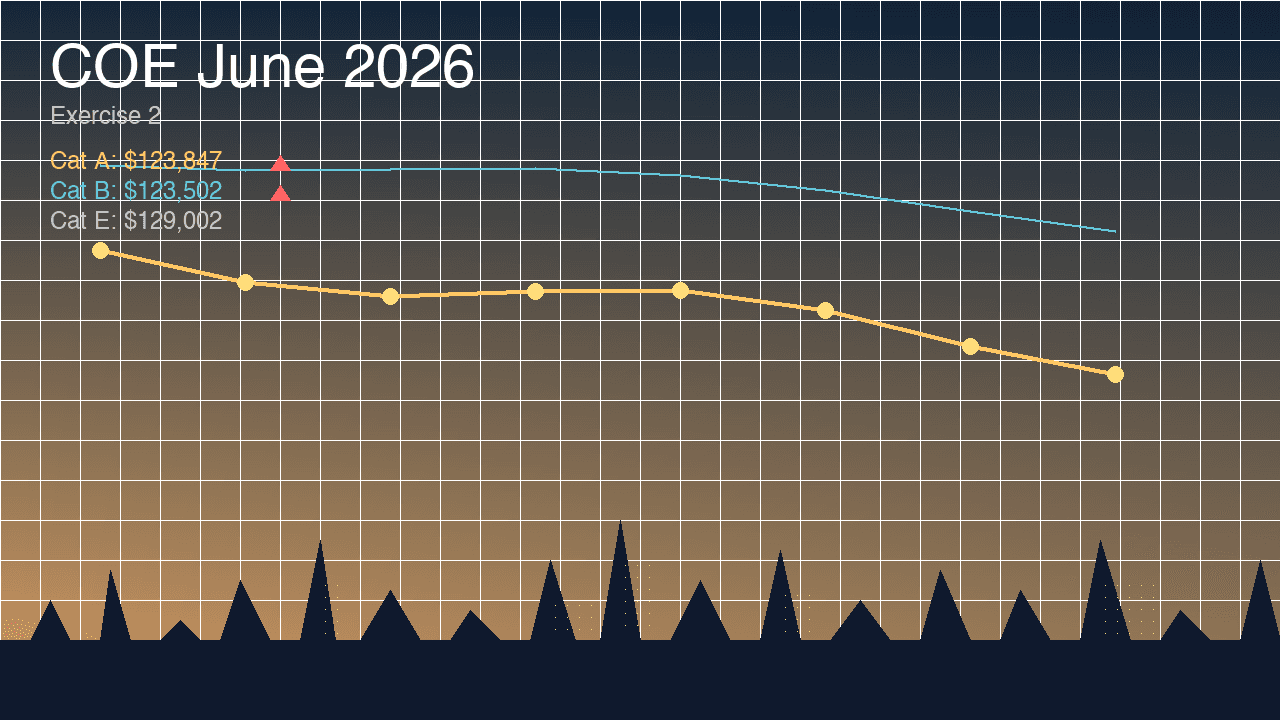
In February 2026, Category A prices actually exceeded Category B — a reversal of the traditional pricing pattern that has held for most of the COE system's history.
What LTA Is Considering
The review will gather public and industry views on several potential changes. One option raised by Members of Parliament is applying discounts or surcharges based on Open Market Value rather than purely on power output.
Such a shift would fundamentally change how EVs are classified. Currently, a premium EV with 109 kW competes for the same COE pool as an entry-level model with identical power output. An OMV-based system could separate luxury EVs from mass-market offerings regardless of power rating.
The review also comes as COE quota dynamics shift. Category A supply peaked last year and is now declining, while Category B quotas continue increasing through 2026. This supply imbalance alone would push the two categories closer together.
Implications for EV Buyers
For prospective EV owners, the review introduces uncertainty into purchasing timelines. Buyers currently considering Category A-eligible EVs — the BYD Atto 3, MG4, or Hyundai Kona Electric among them — face a potential reclassification that could push their desired vehicle into Category B.
The flip side applies to those eyeing more powerful EVs. Models currently in Category B due to power output alone could potentially drop to Category A under revised criteria, reducing upfront costs significantly.
The 110 kW threshold has shaped Singapore's EV market profoundly. It explains why some models available internationally at higher power outputs are detuned specifically for Singapore, and why certain performance variants never reach our shores at all.
Looking Ahead
Any changes to COE categorisation will require careful calibration. The system must balance multiple objectives: controlling vehicle population, managing congestion, encouraging cleaner vehicles through the VES scheme, and maintaining a functional market for both buyers and manufacturers.
Siow has not provided a timeline for the review's completion, though public consultations typically run several months. Implementation of any changes would likely follow with appropriate transition periods.
For EV buyers, the message is clear: the categorisation rules that have shaped the market for the past decade may soon change. Those planning purchases in the coming year should factor in potential reclassification, particularly if considering vehicles near the current 110 kW threshold.
The review represents an acknowledgment that Singapore's vehicle taxation framework must evolve alongside the shift to electrification. As the COE system approaches its 36th year, it faces perhaps its most significant adaptation yet — one that will shape the EV market for years to come.
Stay Charged Up
Get the latest EV news, reviews, and analysis delivered to your inbox every week.